Around the world

World Events

Awesome things in the sky at amazing places, soonest first, with where to stand and when.

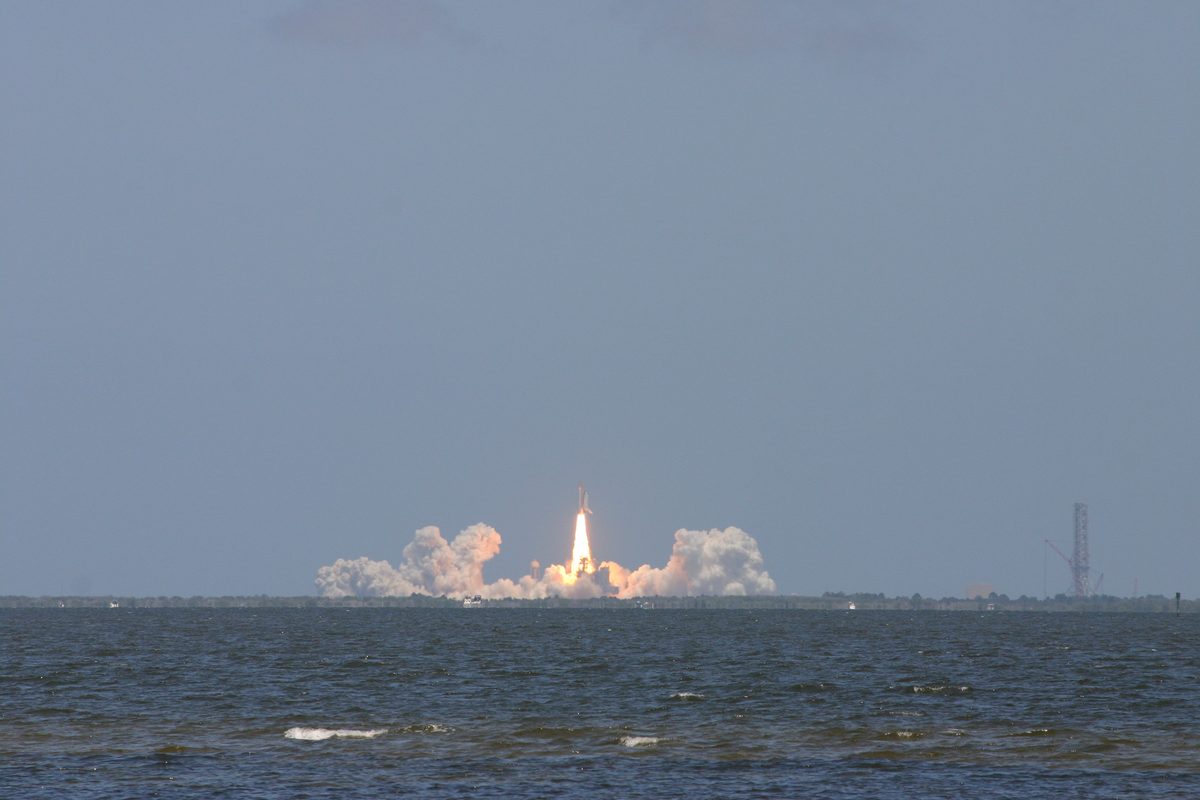
A Space Shuttle rises on a column of fire and smoke from the Kennedy Space Center, seen across the Indian River from Titusville.
A Space Shuttle launch from before 2011, not the next mission. DaSpader · CC BY-SA 3.0 · Wikimedia Commons
Lift-off · 6:30 AM local Monday, October 19, 2026

A launch from the Space Coast

Titusville, Florida Exact date

Falcon 9 Block 5 | Bandwagon 5 (Dedicated Mid-Inclination Rideshare)

Cape Canaveral launches more rockets than anywhere on Earth: Falcon 9s most weeks, plus Falcon Heavy, Atlas V, Vulcan and SLS. Across the Indian River from the pads, Titusville has a front-row view, and the rumble reaches it roughly a minute after liftoff, depending on the pad.

Tip Launch times slip, so check the day before. Night and twilight launches are the most spectacular.
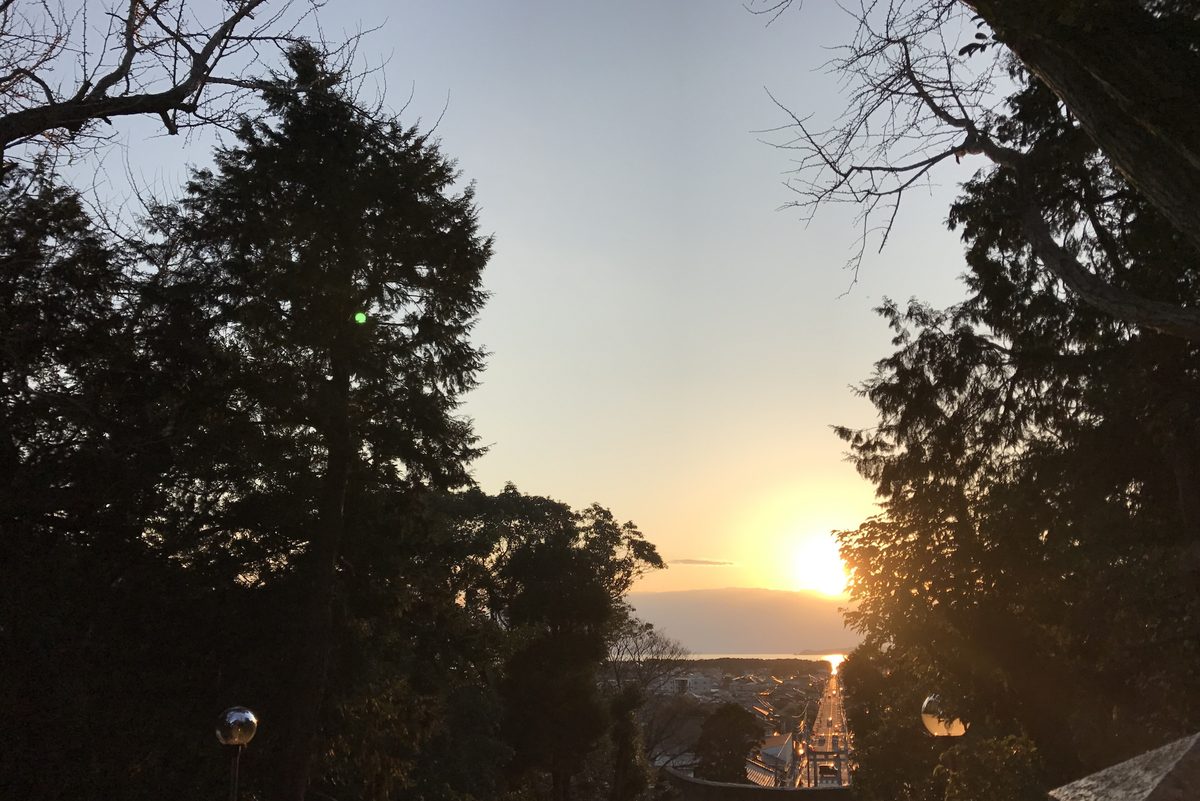
The low Sun shines down the long straight approach road below Miyajidake Shrine toward the sea, lighting the road gold.
Close to, but not exactly at, the alignment. そらみみ (cropped) · CC BY-SA 4.0 · Wikimedia Commons
Sunset · 5:39 PM local Tuesday, October 20, 2026

The Path of Light at Miyajidake

Miyajidake Shrine, Fukutsu, Japan Alignment window

Again Saturday, February 20, 2027

Twice a year, the setting Sun lines up with the long, straight approach road that runs from Miyajidake Shrine down to the sea, and lays a road of light from the horizon to the shrine's steps. A TV commercial made it famous across Japan.

Tip The alignment works for a few days around the dates shown. The steps fill early, and the shrine has run seated viewings on the main days, so check its notices before going.

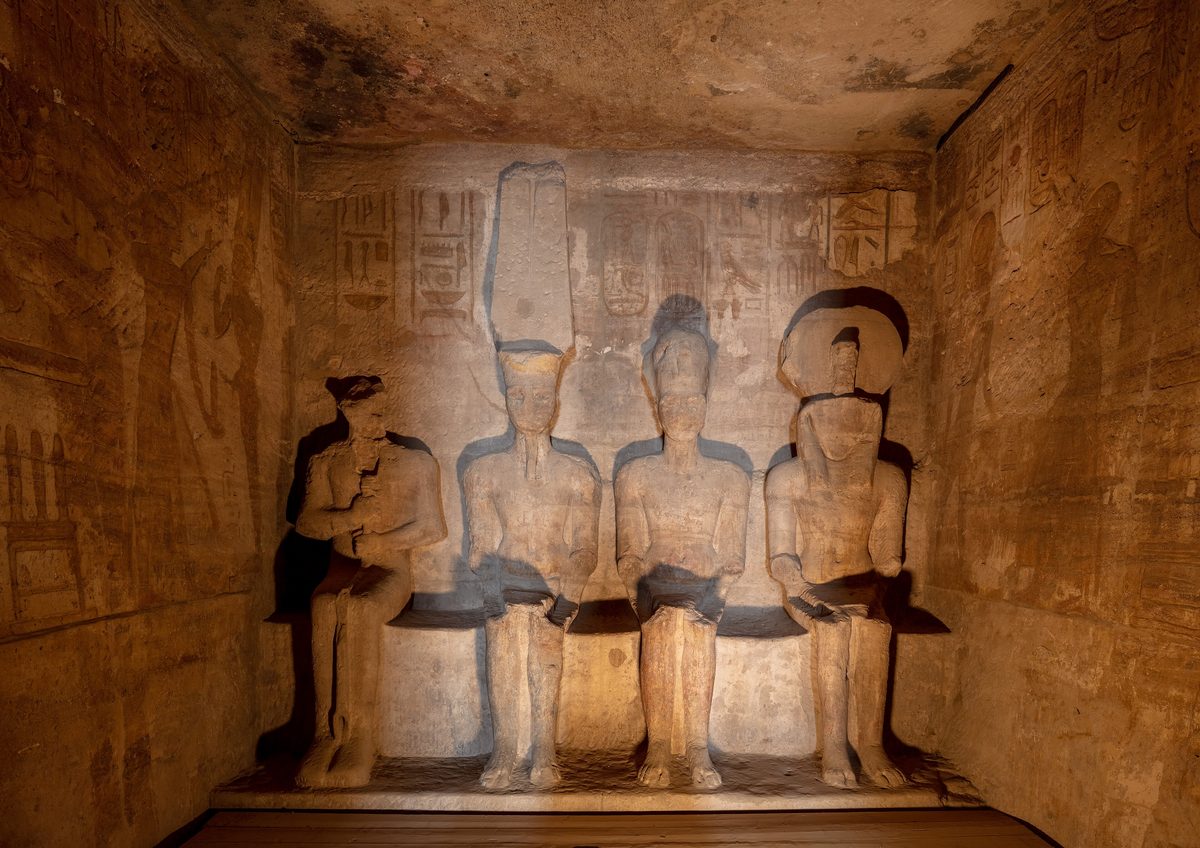
The four seated statues of Ptah, Amun-Ra, Ramesses II and Ra-Horakhty in the sanctuary of the Great Temple at Abu Simbel.
The sanctuary the sunrise reaches, lit by the temple's lamps, not the Sun. Diego Delso · CC BY-SA 4.0 · Wikimedia Commons
Sunrise · 6:52 AM local Thursday, October 22, 2026

The Sun Festival at Abu Simbel

Abu Simbel, Egypt Exact date

Again Monday, February 22, 2027

Twice a year, the sunrise reaches 60 meters into the Great Temple and lights up the statues of Ramesses II and two gods in the sanctuary. Ptah, a creator god and patron of craftsmen with ties to the underworld, stays in the dark beside them. The whole temple was moved uphill in the 1960s to escape a dam's lake, and the alignment still works.

Tip Crowds queue through the night. The light reaches the sanctuary about 20 minutes after sunrise.

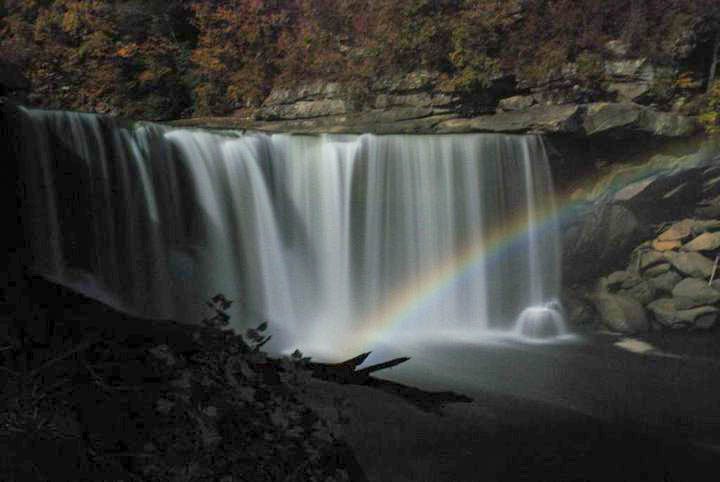
A pale moonbow arcs across the spray at the foot of Cumberland Falls on a moonlit night.
PEO ACWA · CC BY 2.0 · Wikimedia Commons
Moonrise · 6:15 PM local Sunday, October 25, 2026

A moonbow at Cumberland Falls

Cumberland Falls, Kentucky Seasonal opportunity

Full Hunter's Moon

On clear nights around the full Moon, moonlight makes a rainbow in the spray of Cumberland Falls, one of the few places in the world where a moonbow shows reliably. To the eye it looks silvery; a long exposure brings out its colors.

Tip Go from two nights before to two nights after the full Moon, once the Moon is up behind you. The park lists its moonbow nights.

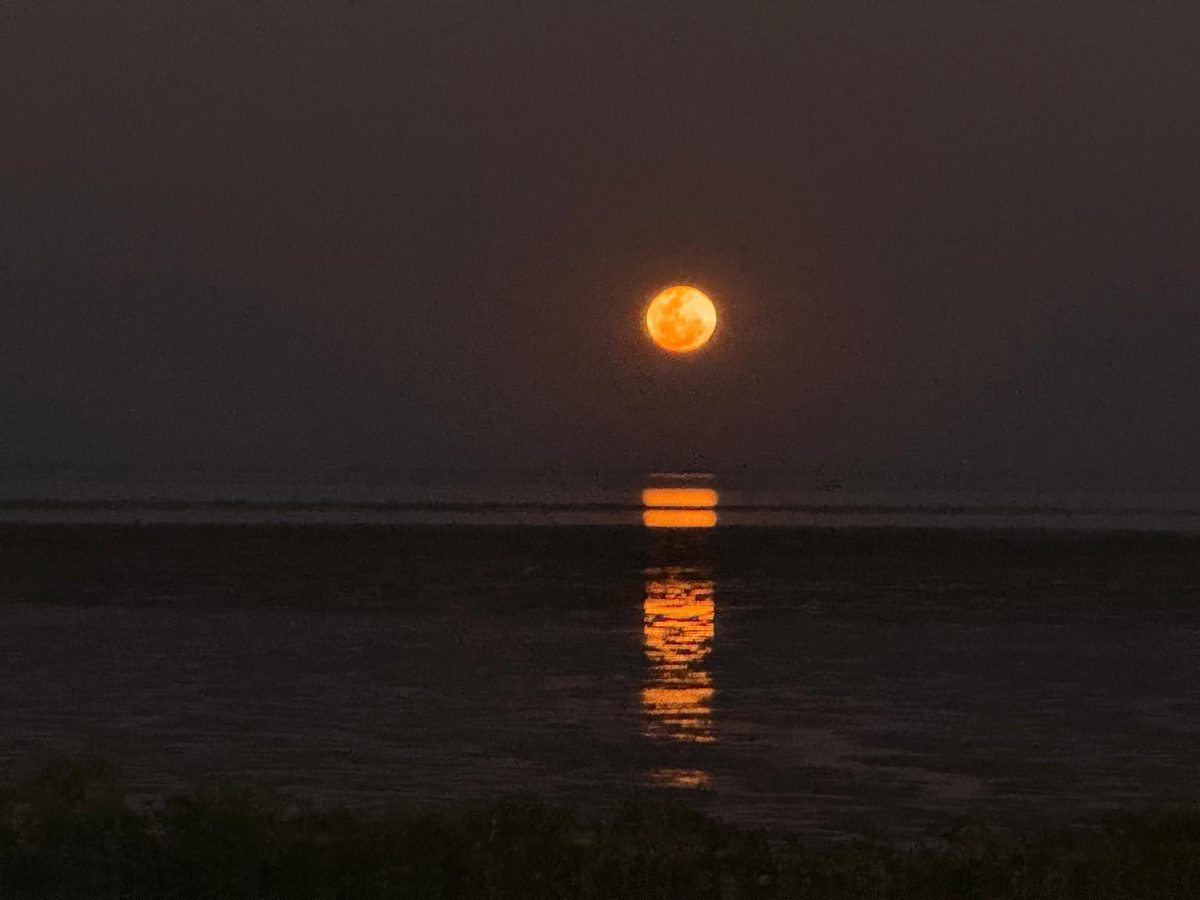
The rising full Moon lays a ladder of orange light across the tidal flats of Roebuck Bay at Broome.
Johnorchard · CC BY-SA 4.0 · Wikimedia Commons
Moonrise · 6:05 PM local Monday, October 26, 2026

The Staircase to the Moon

Broome, Western Australia Seasonal opportunity

Full Hunter's Moon

When the full Moon rises over Roebuck Bay at low tide, its light breaks across the rippled mudflats into a ladder of gold steps climbing to the Moon. Broome holds night markets on the evenings it happens.

Tip It needs a full-Moon rise and a very low tide together, which happens on a couple of evenings a month from March to October. Broome's visitor centre publishes the year's dates and times; the date here is the full Moon, not the tide.

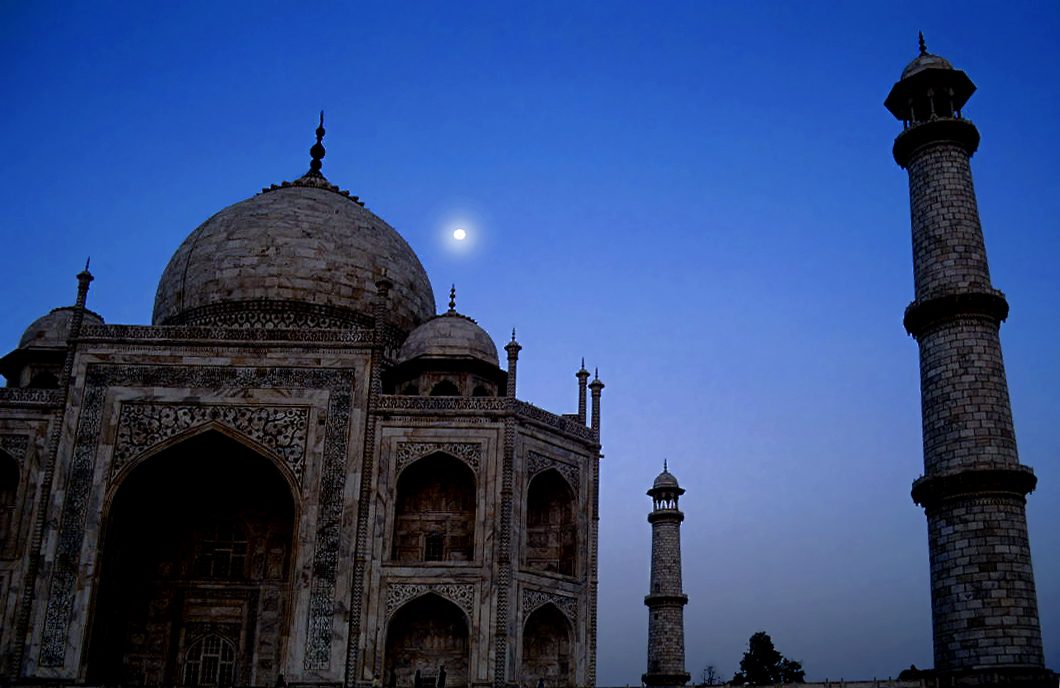
A nearly full Moon shines in the deep blue evening sky between the marble dome and a minaret of the Taj Mahal.
LBM1948 · CC BY-SA 4.0 · Wikimedia Commons
Moonrise · 5:33 PM local Monday, October 26, 2026

The Taj Mahal by moonlight

Agra, India Exact date

Full Hunter's Moon

On the night of the full Moon, and two nights either side, the Taj Mahal opens for night viewing, and the white marble glows silver-blue. From the garden across the river you can watch the Moon rise beside it.

Tip Night tickets are limited: book online through the official Taj Mahal site, then report to Shilpgram, by the East Gate, 30 minutes before your session. Sessions run from 8 PM to midnight. There's no viewing on Fridays or during Ramadan.

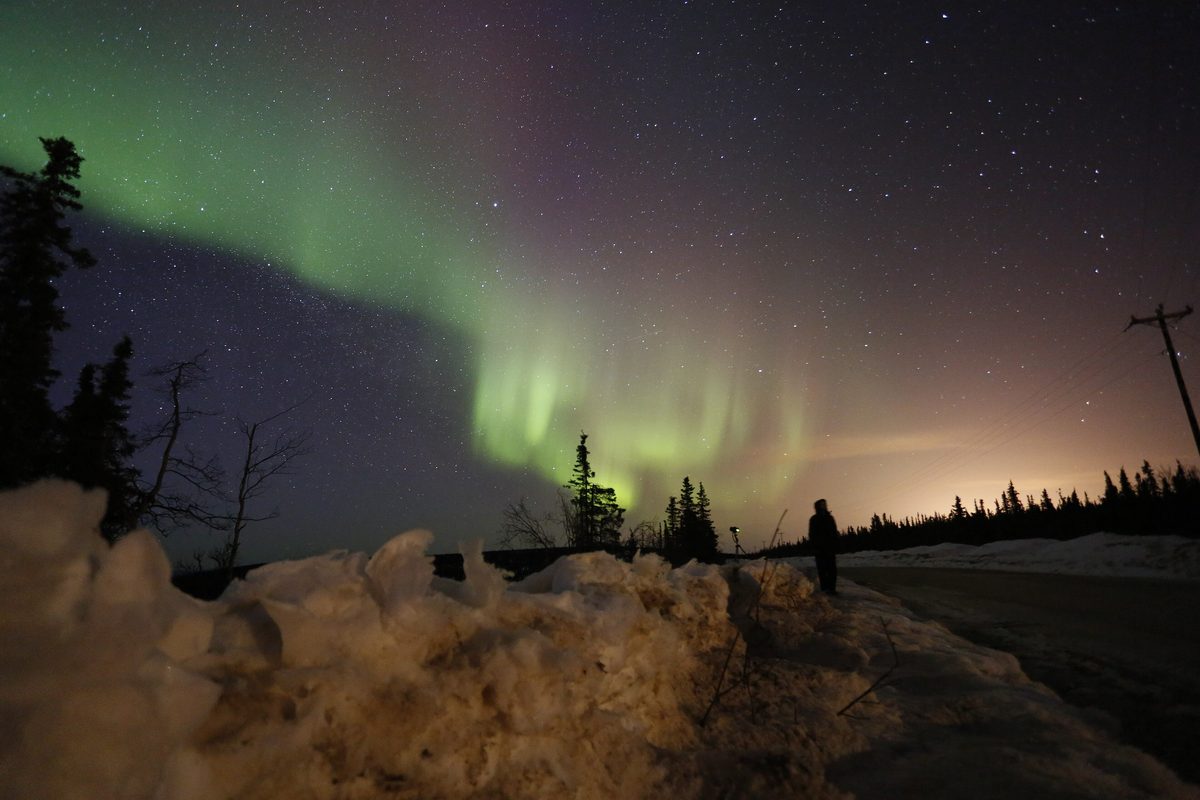
A green aurora arcs across a starry sky over spruce trees and a snowy roadside near Fairbanks.
Luke Kilpatrick · CC BY 2.0 · Wikimedia Commons
Fully dark · 7:00 PM local Sunday, November 8, 2026

Aurora in Fairbanks

Fairbanks, Alaska Seasonal opportunity

The darkest nights, around the new Moon · A dark-sky window, not an aurora forecast: check the aurora and cloud forecasts on the day

Fairbanks is one of the best places on Earth for the northern lights. When it's clear between late August and April, there's a good show most nights. Locals' advice: dress like you mean it.

Tip The best hours are usually 10 PM to 2 AM. Drive up to a ridge out of town for a dark northern horizon.

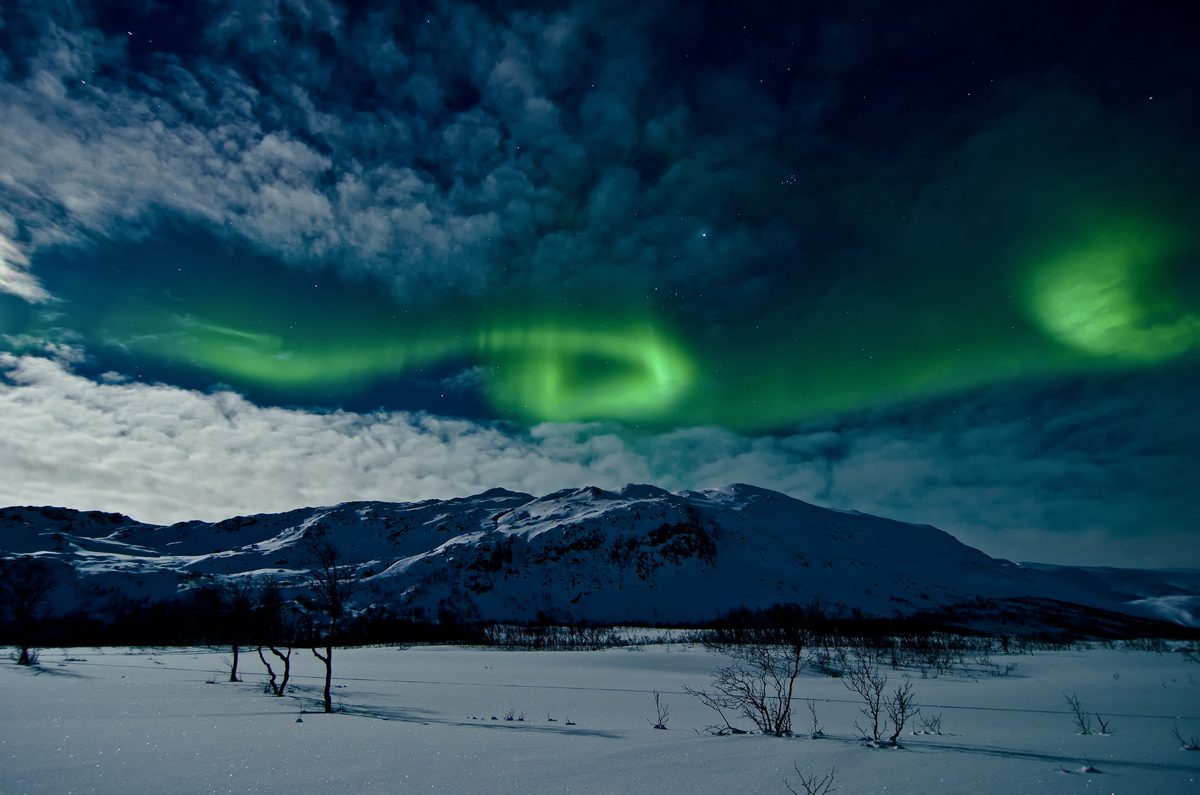
Green rings of the northern lights swirl through moonlit clouds above snowy mountains near Tromsø.
Andi Gentsch · CC BY-SA 2.0 · Wikimedia Commons
Fully dark · 5:53 PM local Monday, November 9, 2026

Northern lights over Tromsø

Tromsø, Norway Seasonal opportunity

The darkest nights, around the new Moon · A dark-sky window, not an aurora forecast: check the aurora and cloud forecasts on the day

Tromsø sits right under the auroral oval, so on a clear, dark night the northern lights often show. From late November to mid-January the Sun doesn't rise at all, so the aurora can show in the middle of the afternoon.

Tip Telegrafbukta, a beach park at the south tip of the island, is about 3 km from the city centre and dark enough on a good night. For the darkest skies, take a tour out to the fjords. A bright aurora can show before full dark.

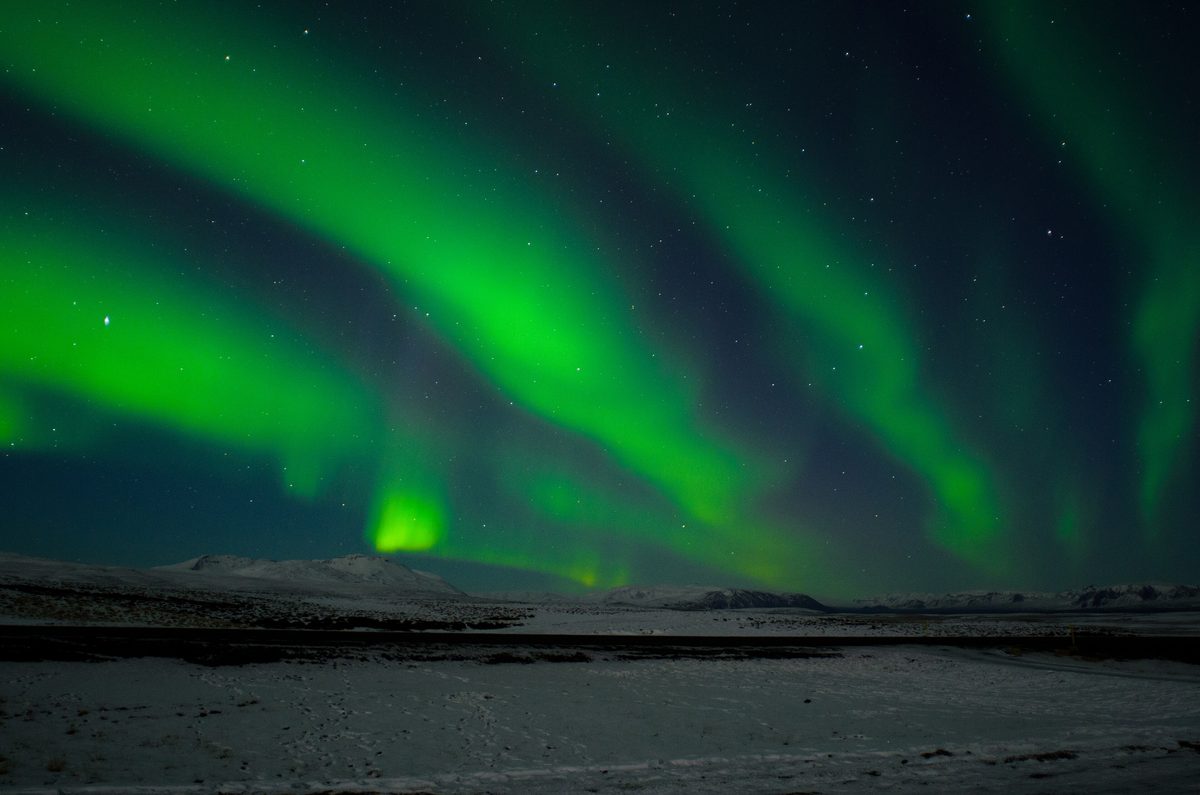
Bright green bands of the northern lights stretch across a starry sky over snowy ground in Þingvellir National Park.
Carl Young · CC BY-SA 4.0 · Wikimedia Commons
Fully dark · 7:34 PM local Monday, November 9, 2026

Aurora over Þingvellir

Þingvellir, Iceland Seasonal opportunity

The darkest nights, around the new Moon · A dark-sky window, not an aurora forecast: check the aurora and cloud forecasts on the day

Less than an hour from Reykjavík, Þingvellir lies in the rift where the North American and Eurasian plates are pulling apart. On a clear winter night you can stand between two continents and watch the aurora dance overhead.

Tip Check Iceland's cloud forecast. The sky can be clear inland when Reykjavík is cloudy.

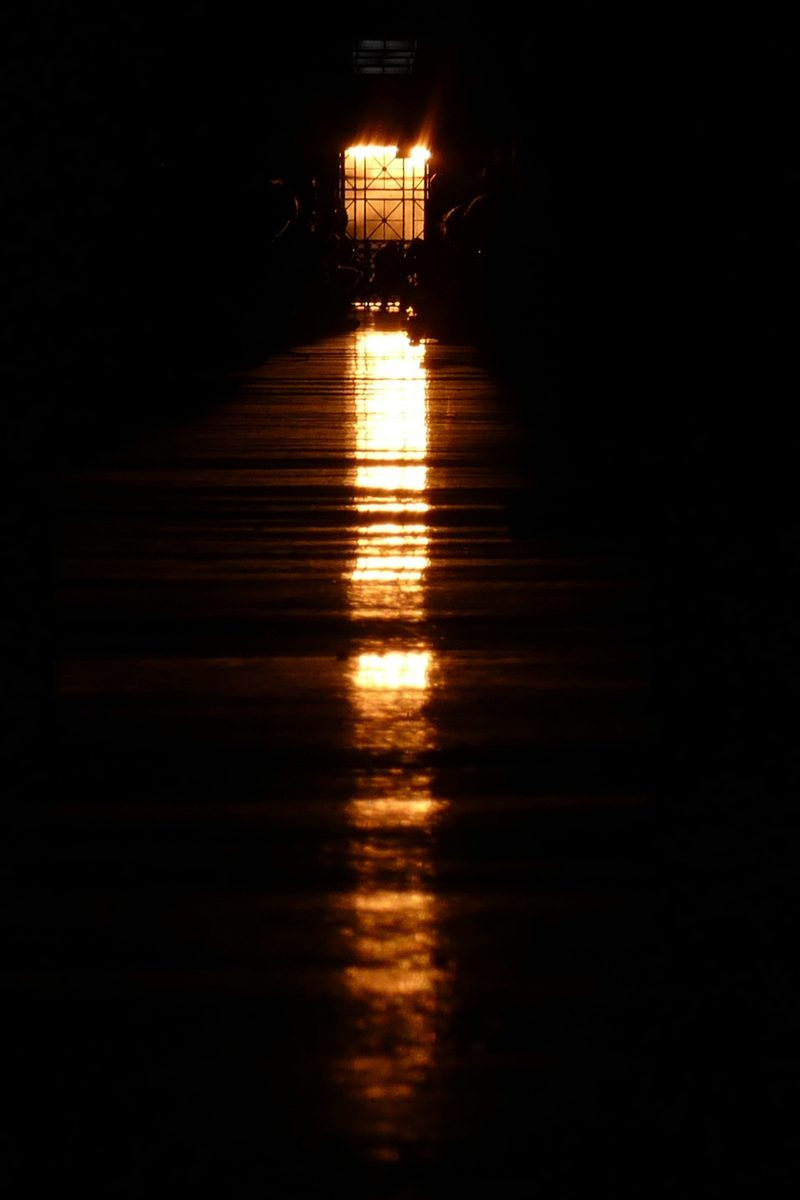
The setting Sun shines down the length of MIT's Infinite Corridor, laying a line of gold light along the dark floor.
AI coolTIM · CC BY-SA 4.0 · Wikimedia Commons
Alignment · 4:22 PM local Thursday, November 12, 2026

MIThenge

MIT, Cambridge, Massachusetts Alignment window

The day before and after work too, with the Sun a little higher or lower · Again Friday, January 29, 2027 at 4:51 PM

Twice a year, the setting Sun shines straight down MIT's Infinite Corridor, a hallway a sixth of a mile long, and lights it end to end. Students pack the third floor to watch.

Tip The alignment comes a few minutes before sunset. Arrive 15 minutes early and watch from the far east end of the corridor, on the third floor of Building 8. MIT publishes its own predictions each year.

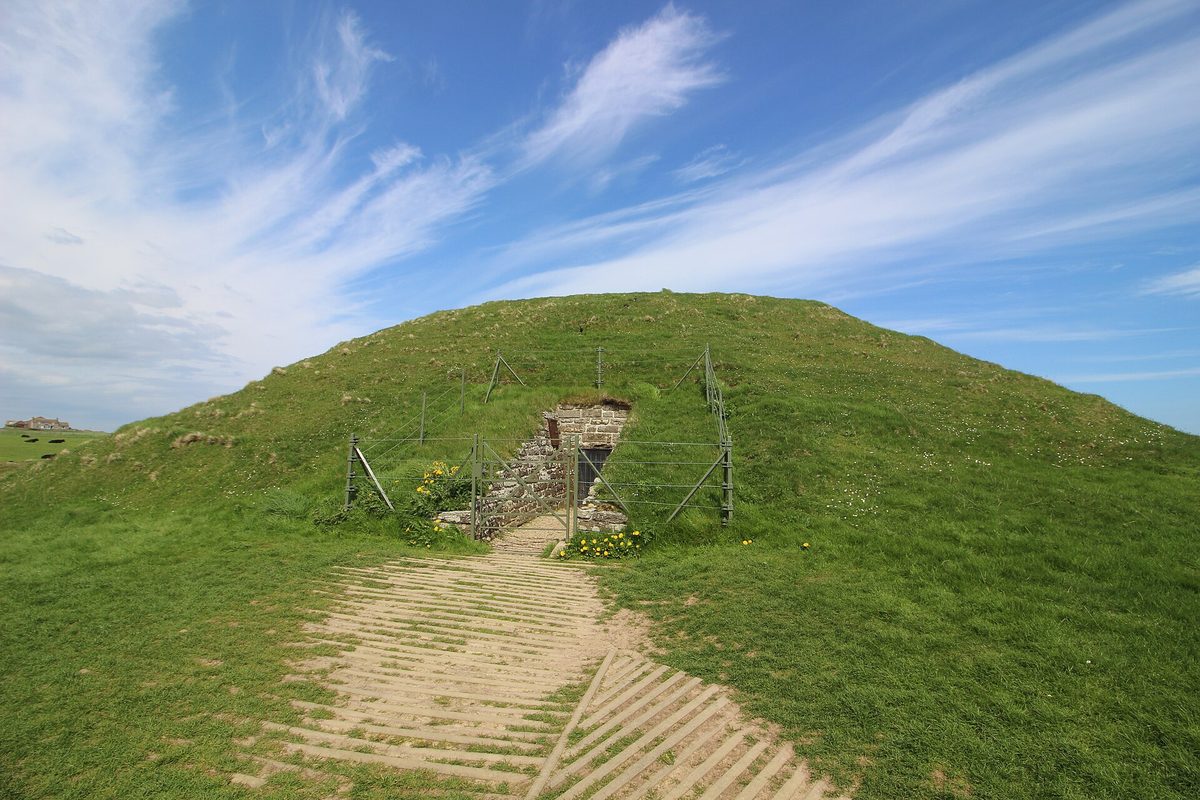
The grass-covered mound of Maeshowe on Orkney, with its stone-lined entrance passage, the passage the midwinter sunset shines down.
Maeshowe from outside, in May 2018. Beep boop beep · CC BY-SA 4.0 · Wikimedia Commons
Sun down the passage · 3:05 PM local Sunday, November 29, 2026

Winter sunlight inside Maeshowe

Maeshowe, Orkney, Scotland Alignment window

From November 29 to January 12

For about three weeks either side of the winter solstice, the low afternoon Sun shines straight down the long entrance passage of this 5,000-year-old tomb and lights the back wall of its central chamber. Vikings later broke in and left runes on the walls.

Tip The beam comes in the hour before sunset, in mid-afternoon this far north. Book a guided visit with Historic Environment Scotland; cloud on the southwest horizon means no beam.

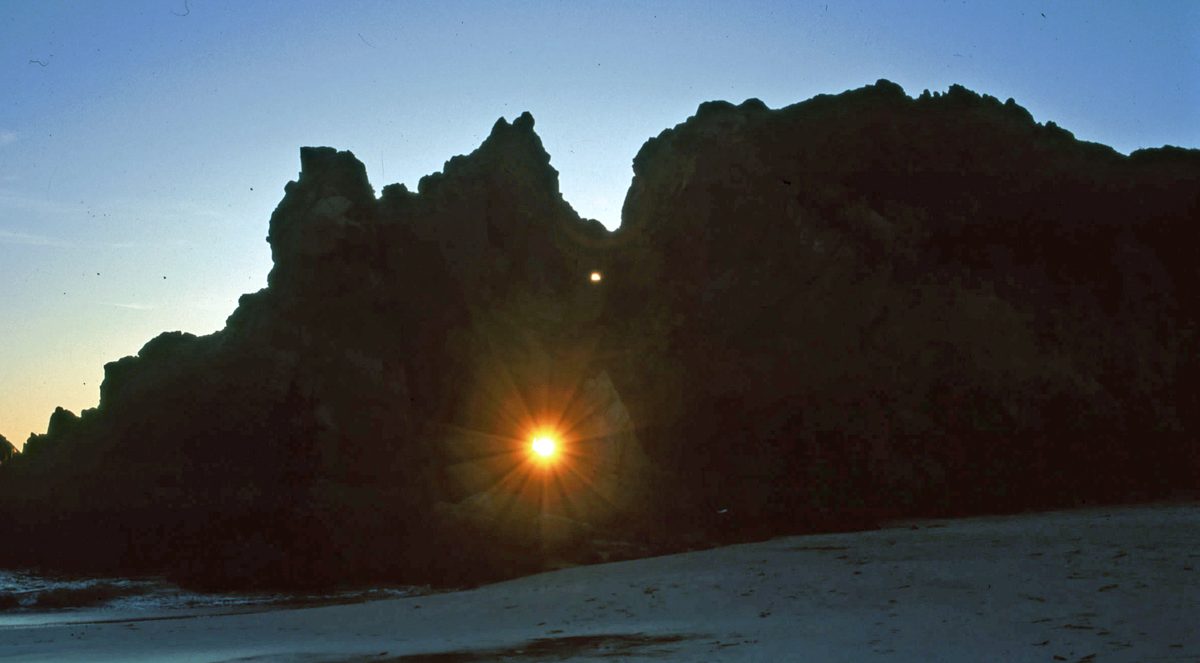
The setting Sun shines through the hole in Keyhole Arch at Pfeiffer Beach, the rock a dark silhouette against the dusk sky.
qwesy qwesy · CC BY 3.0 · Wikimedia Commons
The beam through the arch · 4:22 PM local Tuesday, December 1, 2026

Sunset through Big Sur's Keyhole Arch

Pfeiffer Beach, Big Sur, California Alignment window

From December 1 to January 20

For a few weeks around the winter solstice, the setting Sun lines up with the hole in Keyhole Arch, a rock just off Pfeiffer Beach, and shoots a golden beam through the sea spray.

Tip The beam shows in the last hour before sunset; exactly which days depends on where you stand on the beach. The road down is narrow and the small lot fills early.

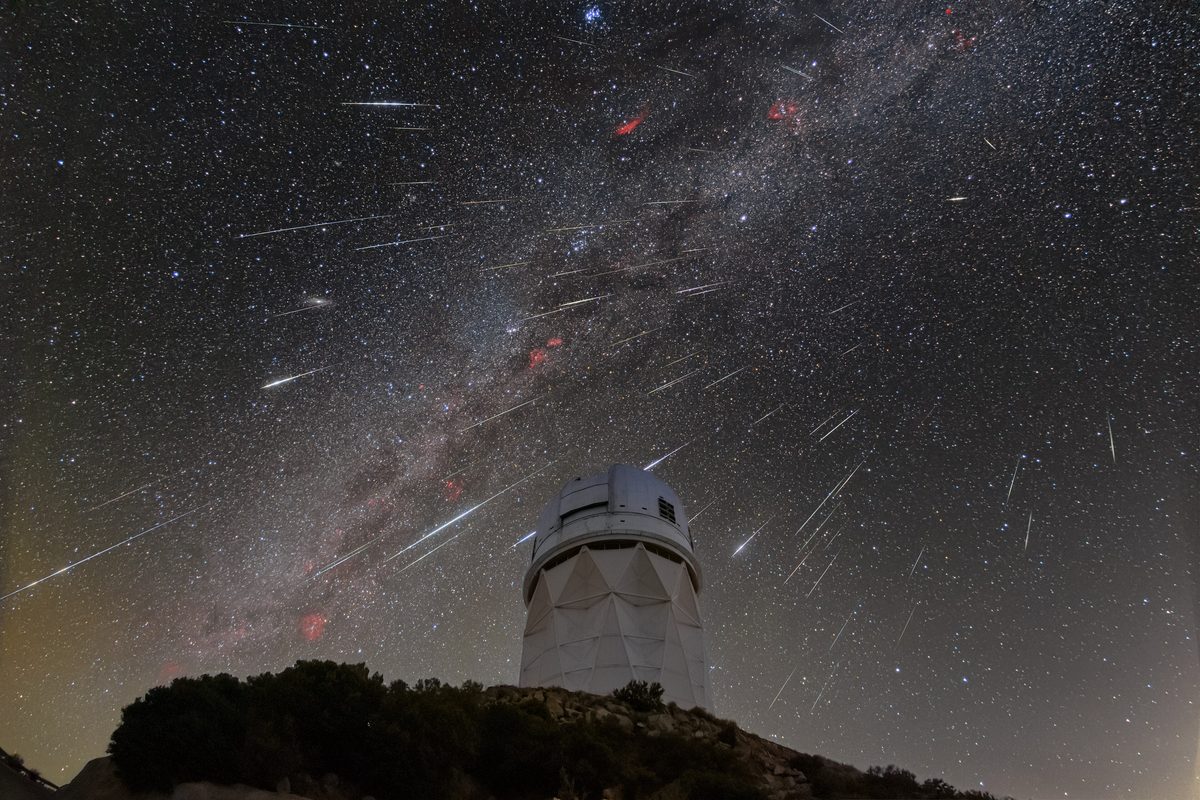
Dozens of Geminid meteors streak across the Milky Way above a white telescope dome on a desert mountaintop.
Geminids over Kitt Peak, Arizona, many exposures combined into one picture. KPNO/NOIRLab/NSF/AURA/R. Sparks (NSF’s NOIRLab) · CC BY 4.0 · Wikimedia Commons
Peak night · 11:30 PM local Sunday, December 13, 2026

The Geminids in Death Valley

Death Valley, California Exact date

Up to about 150 an hour under a perfect sky · Moon 23% lit, setting at 8:55 PM: best after that

The Geminids are the year's richest meteor shower, and Death Valley is one of the darkest places in the US. Lie back on the sand dunes on a cold December night and count over a hundred an hour under a perfect sky.

Tip Unlike most showers, the Geminids start well before midnight. Bring a sleeping bag: desert nights in December are near freezing.

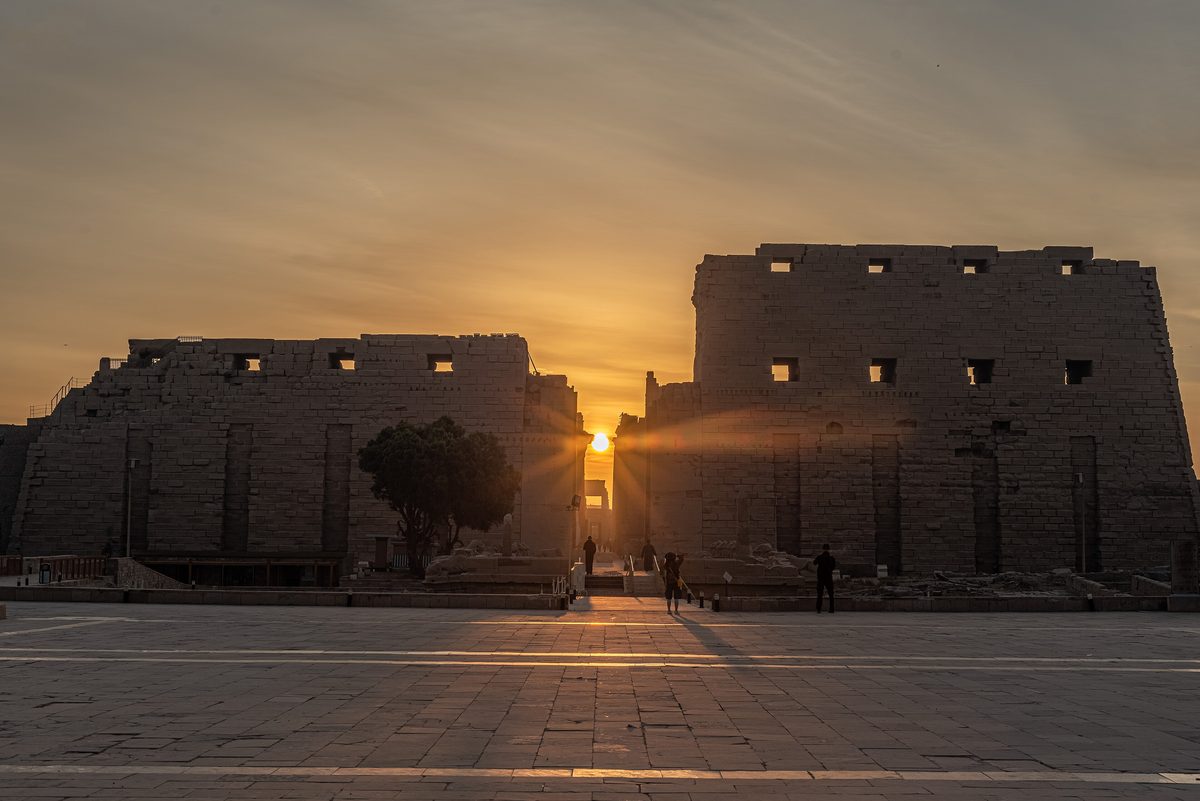
The rising Sun shines through the gateway of Karnak's first pylon on the winter solstice.
Mohamedsamah88 · CC BY-SA 4.0 · Wikimedia Commons
Sunrise · 6:31 AM local Monday, December 21, 2026

Midwinter sunrise at Karnak

Karnak, Luxor, Egypt Exact date

Karnak's great temple of Amun-Ra is lined up on the midwinter sunrise. On the shortest day, the Sun comes up along the axis through the gateways, as it did for the priests 3,500 years ago.

Tip The temple opens at 6 AM. Ask for the solstice sunrise; the site often opens a little early for it.

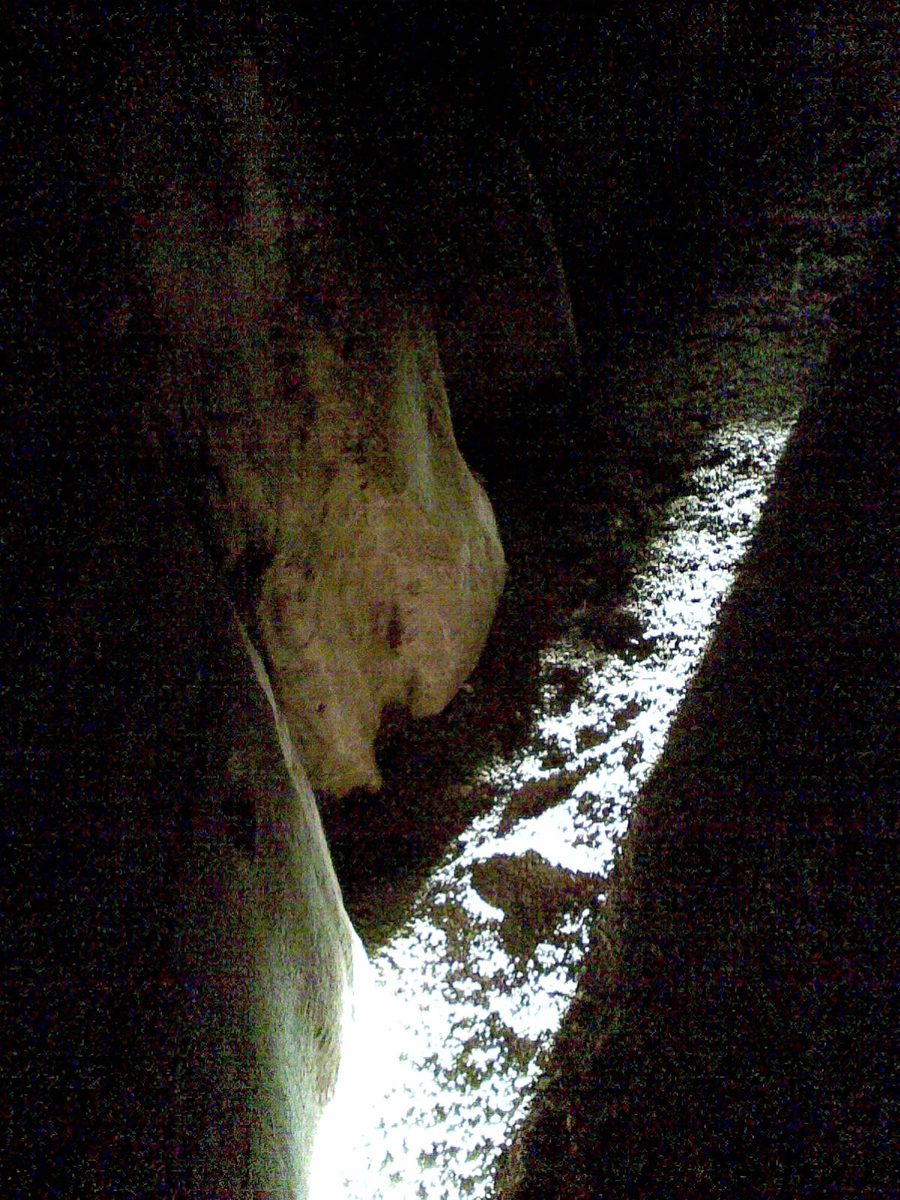
A shaft of winter solstice sunlight lights the floor of the stone passage inside Newgrange.
Dentp · CC BY-SA 4.0 · Wikimedia Commons
Sunrise · 8:41 AM local Monday, December 21, 2026

Winter solstice dawn at Newgrange

Newgrange, Ireland Exact date

Newgrange is a passage tomb older than Stonehenge and the pyramids. For a few mornings around the winter solstice, the rising Sun shines through a little "roof box" over the door and down the 19-meter passage, lighting the chamber for about 17 minutes.

Tip Places inside the chamber are drawn by lottery each year. Anyone can watch the sunrise outside, and the beam shows a few days either side.

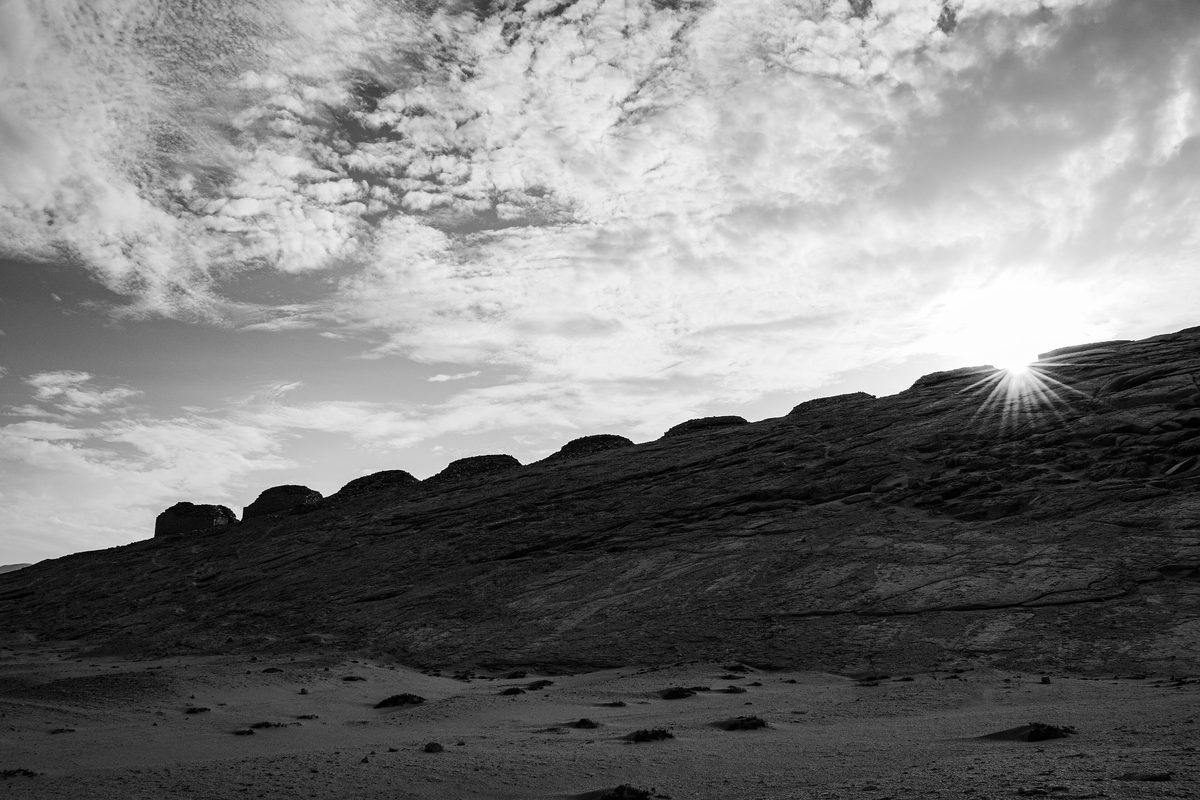
The Sun rises over the ridge beside the row of ancient towers at Chankillo, in black and white.
A sunrise at the towers, on a date not recorded. Corrispo · CC BY-SA 4.0 · Wikimedia Commons
Sunrise · 5:50 AM local Monday, December 21, 2026

Solstice sunrise at the Thirteen Towers

Chankillo, near Casma, Peru Exact date

About 2,300 years ago, people on the coast of Peru built thirteen towers in a row along a ridge. From an observing point beside them, the sunrise moves along the row through the year and reaches the end towers at the solstices: a calendar in stone, now a World Heritage site.

Tip Confirm visiting hours and access with the site before going; the observing point decides which tower the Sun rises at.

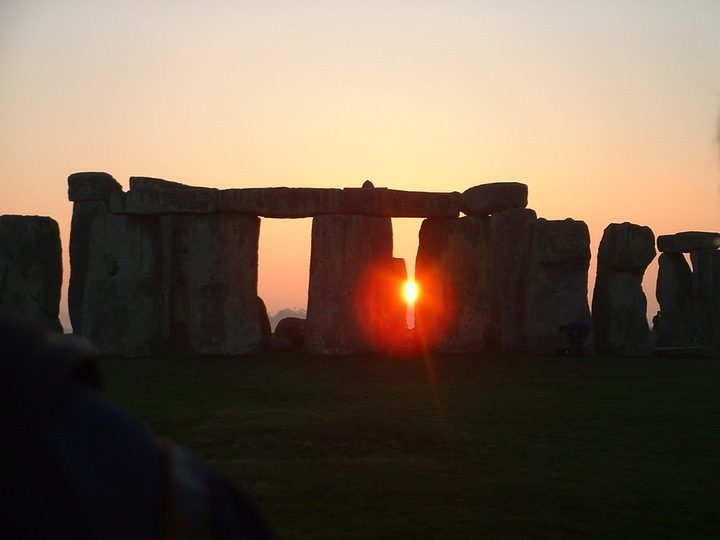
The setting Sun shines through the gap of a trilithon at Stonehenge near the winter solstice.
Vicky WJ from Brighton, UK · CC BY 2.0 · Wikimedia Commons
Sunset · 4:01 PM local Monday, December 21, 2026

Midwinter sunset at Stonehenge

Stonehenge, England Exact date

Many archaeologists think midwinter mattered most of all here. On the shortest day, the setting Sun once sank through the gap of the great trilithon, the tallest arch of all, seen from the Avenue the ancient builders walked. One of its uprights has since fallen, but the line is still there.

Tip Sunset comes before 4:30 PM. English Heritage usually opens the stones for the winter solstice sunrise too; check its announced dates.

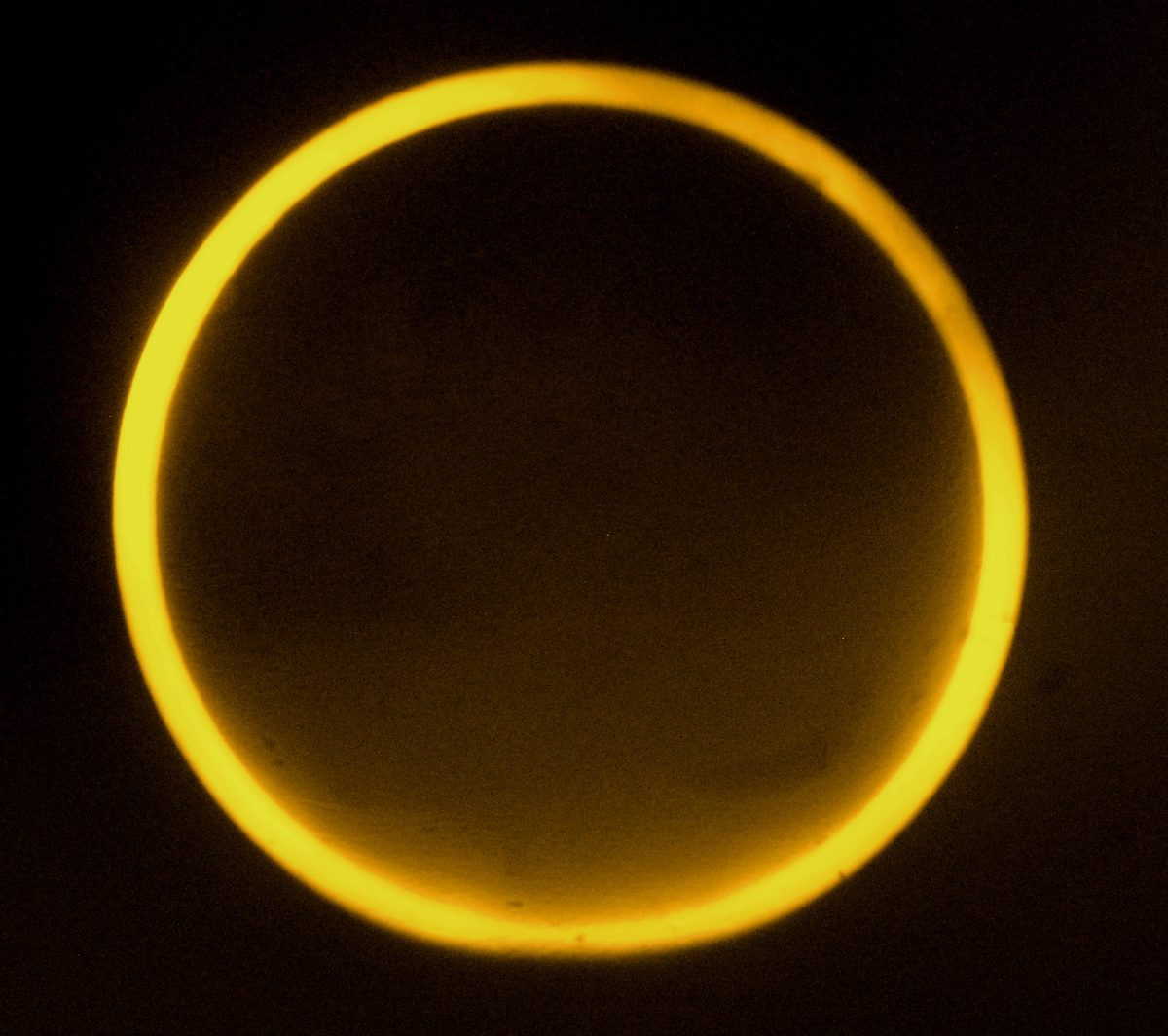
The Moon sits inside the Sun's disc, leaving a thin bright ring of fire around its dark edge.
The annular eclipse of 2 October 2024, from Santa Cruz in Patagonia. Fernando de Gorocica (cropped) · CC BY-SA 4.0 · Wikimedia Commons
The ring of fire begins · 12:10 PM local Saturday, February 6, 2027

A ring of fire over Patagonia

Viedma, Río Negro, Argentina Exact date

The ring 6 min 54 s · Sun 61° up · Eye protection all the way through: the ring is never safe to look at

On February 6, 2027, the Moon passes across the middle of the Sun but is too far from Earth to cover it, leaving a blazing ring around its edge: an annular eclipse, the ring of fire. Its path crosses northern Patagonia at Viedma, at midday in summer.

Tip Eclipse glasses or a proper solar filter from start to finish: unlike totality, the ring is never safe to look at. The path is narrow, so check that your spot is inside it.

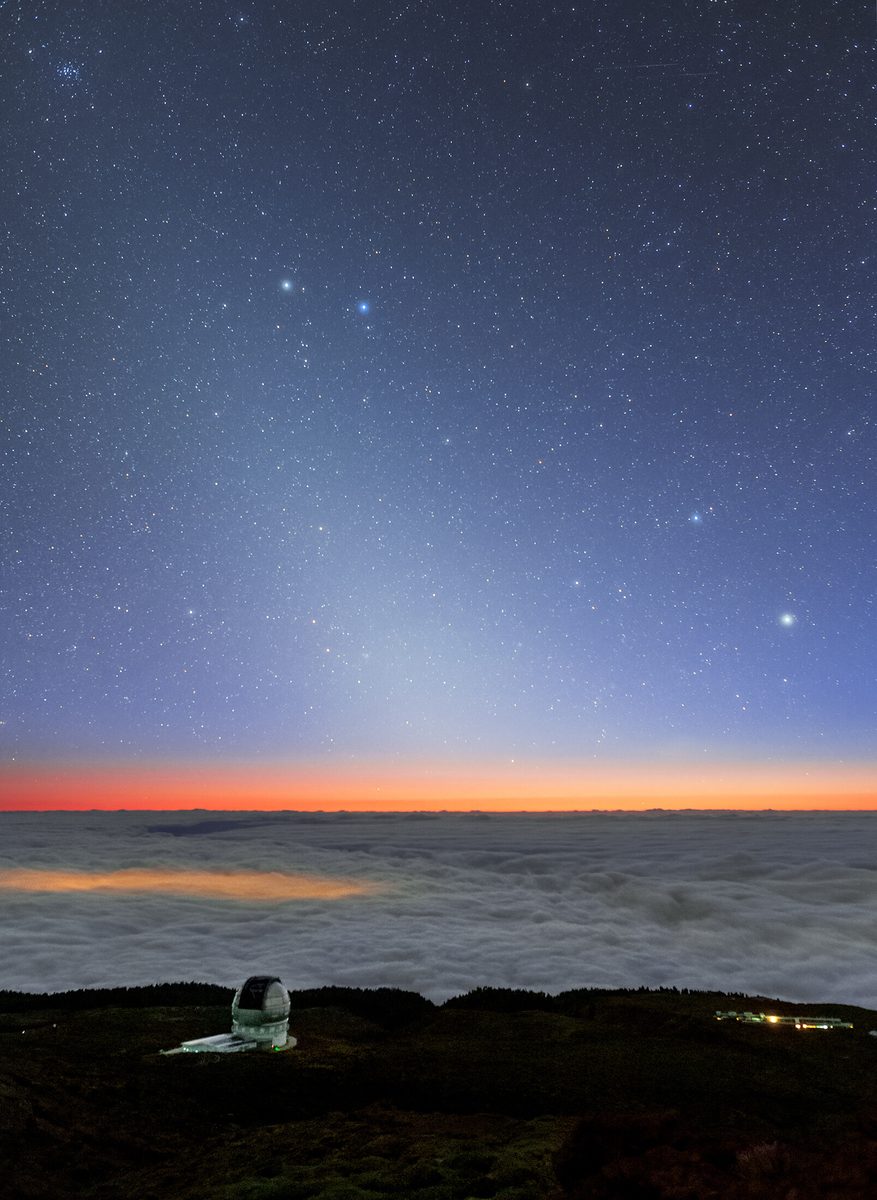
A faint cone of zodiacal light rises from the twilight above a sea of clouds and the Gran Telescopio Canarias dome on La Palma.
Amirreza Kamkar/IAU OAE · CC BY 4.0 · Wikimedia Commons
Fully dark · 8:14 PM local Saturday, February 6, 2027

The false dawn over La Palma

Roque de los Muchachos, La Palma Seasonal opportunity

The darkest nights, around the new Moon

High above the clouds on La Palma, where the island protects its dark skies by law, you can see the zodiacal light: a faint tilted cone of glow from sunlight scattered by dust between the planets. It was once called the false dawn.

Tip In spring, look west after evening twilight ends; in autumn, look east before morning twilight. Moonless nights only. The road up is long and the summit cold.

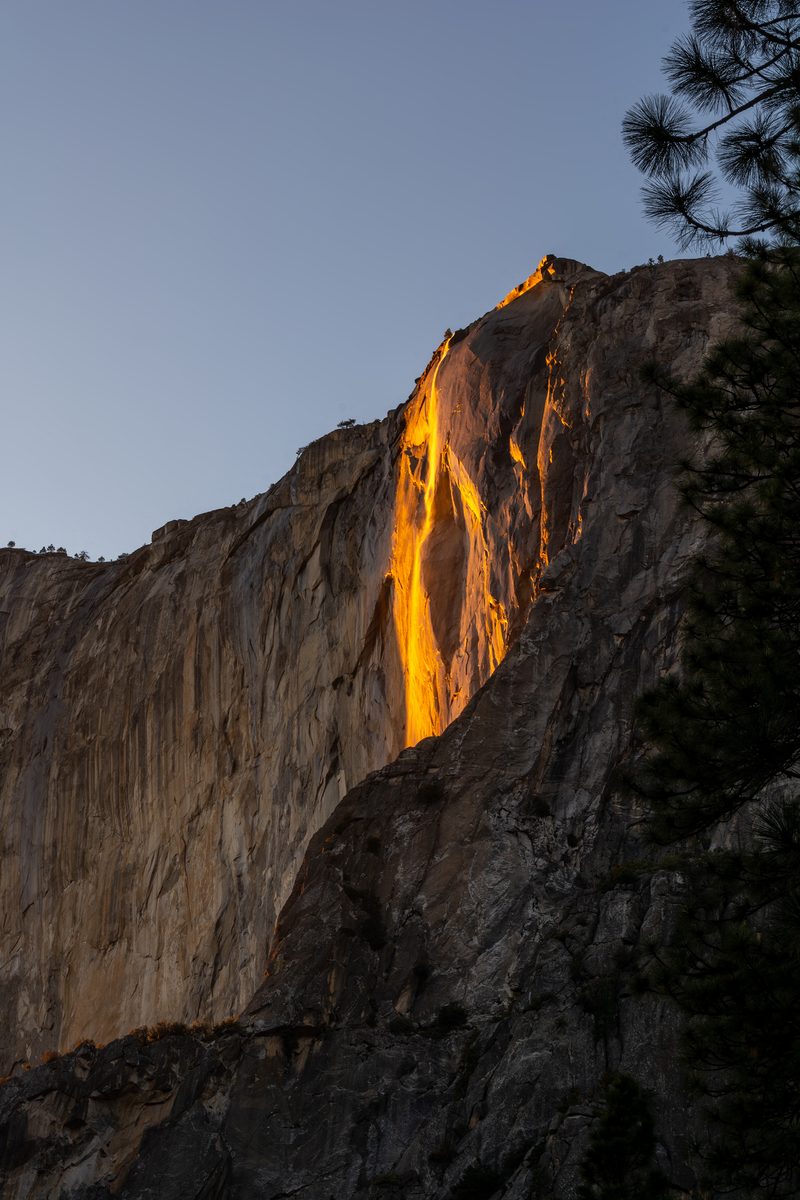
Horsetail Fall glows orange like lava in the last sunlight as it pours down the face of El Capitan.
Matthew Dillon from Hollywood, CA, USA · CC BY 2.0 · Wikimedia Commons
The last light · 5:21 PM local Wednesday, February 10, 2027

Yosemite's waterfall of fire

Yosemite Valley, California Alignment window

From February 10 to February 28

For a few evenings each February, the setting Sun catches Horsetail Fall as it pours off the east face of El Capitan and turns it glowing orange, like lava running down the cliff. It needs three things at once: water in the fall, a clear sky to the west, and the right week.

Tip The glow comes in the last ten minutes or so before sunset. A dry winter means no fall at all. The National Park Service has required reservations on some February weekends in recent years, so check its Horsetail Fall page before you go.

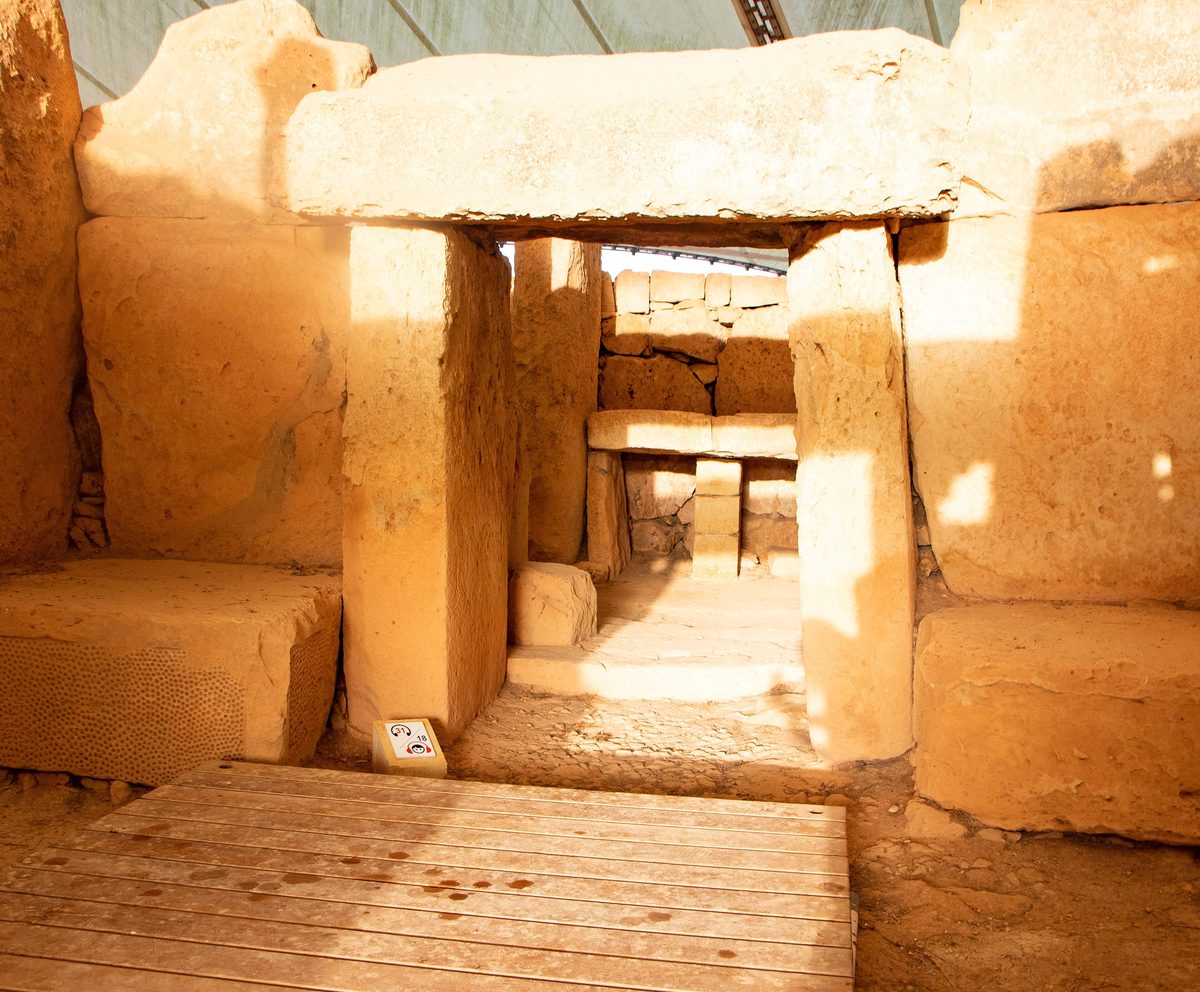
Equinox sunlight shines straight through the stone doorway into the inner chamber of the lower temple at Mnajdra.
Abby793 · CC BY-SA 4.0 · Wikimedia Commons
Sunrise · 6:06 AM local Saturday, March 20, 2027

Equinox sunrise at Mnajdra

Mnajdra Temples, Malta Exact date

Built over 5,000 years ago, older than Stonehenge, the lower temple at Mnajdra faces the equinox sunrise. On those mornings the first light runs straight through the main doorway along the temple's axis.

Tip Heritage Malta runs special dawn visits at the equinoxes and solstices that need booking. At the solstices the light falls instead on the edges of the inner doorway.

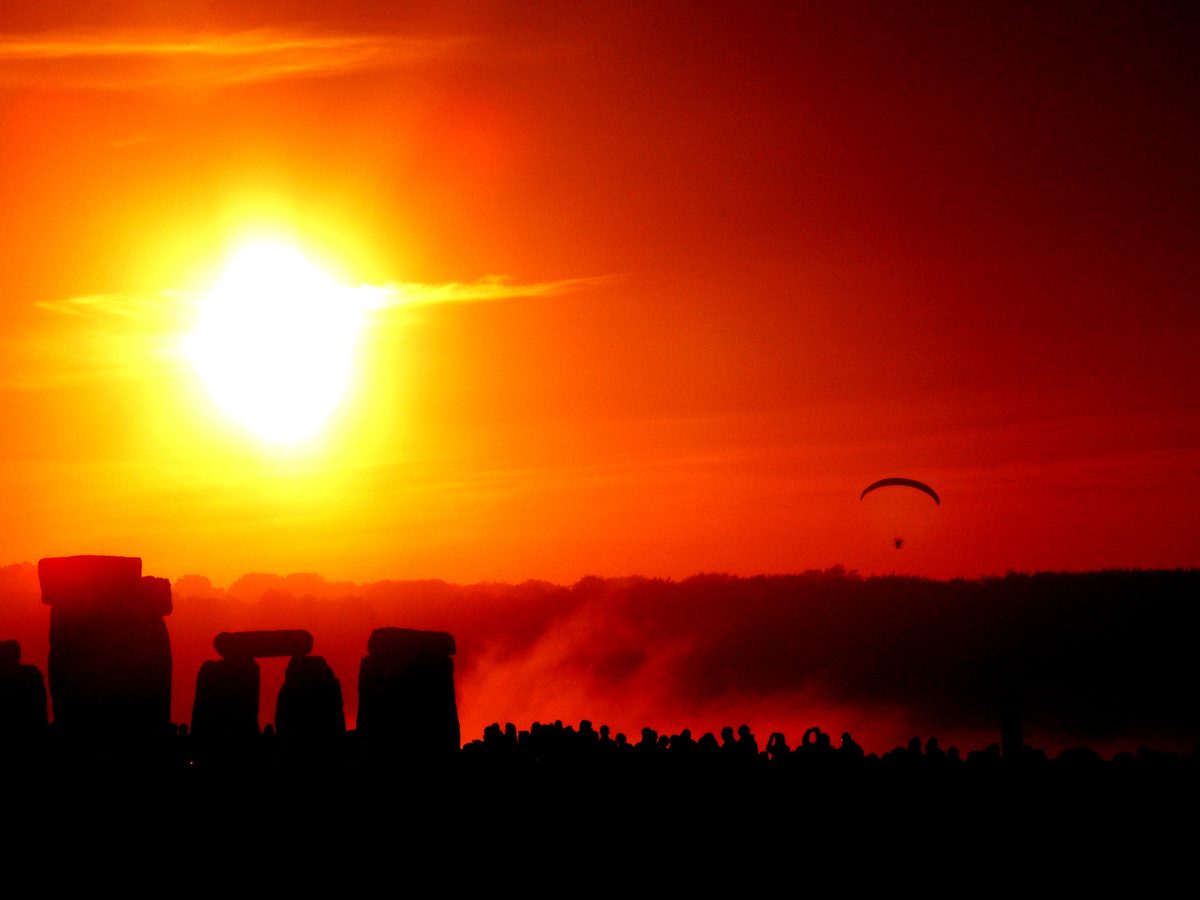
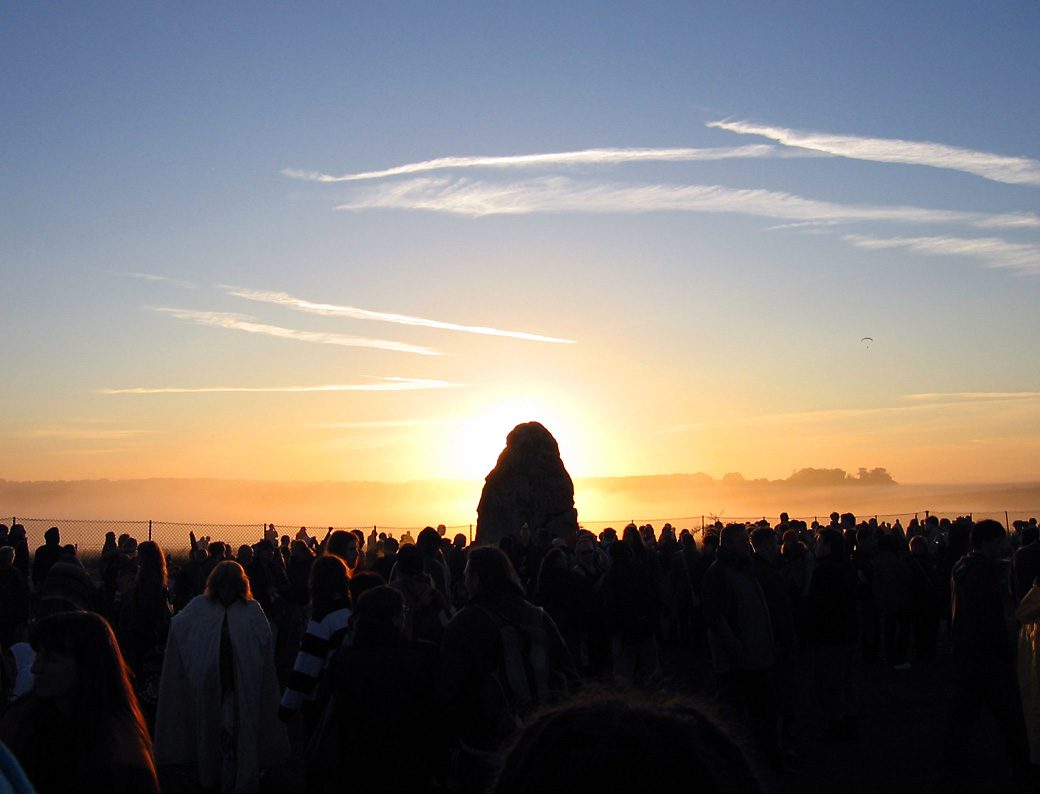
The rising Sun glows red over the silhouetted stones of Stonehenge and a crowd gathered at dawn.
Stonehenge at a solstice dawn, not the equinox. Taro Taylor from Sydney, Australia · CC BY 2.0 · Wikimedia Commons
Sunrise · 6:10 AM local Saturday, March 20, 2027

Equinox sunrise at Stonehenge

Stonehenge, England Exact date

At the equinoxes, English Heritage usually opens the stone circle at dawn and lets everyone walk among the stones, druids, families and photographers alike. The Sun comes up due east, and day and night are nearly equal in length all over the world.

Tip Managed access is free but early: the gates open before first light. Check English Heritage's announced dates before you go. Bring layers. It is chilly on Salisbury Plain at dawn.

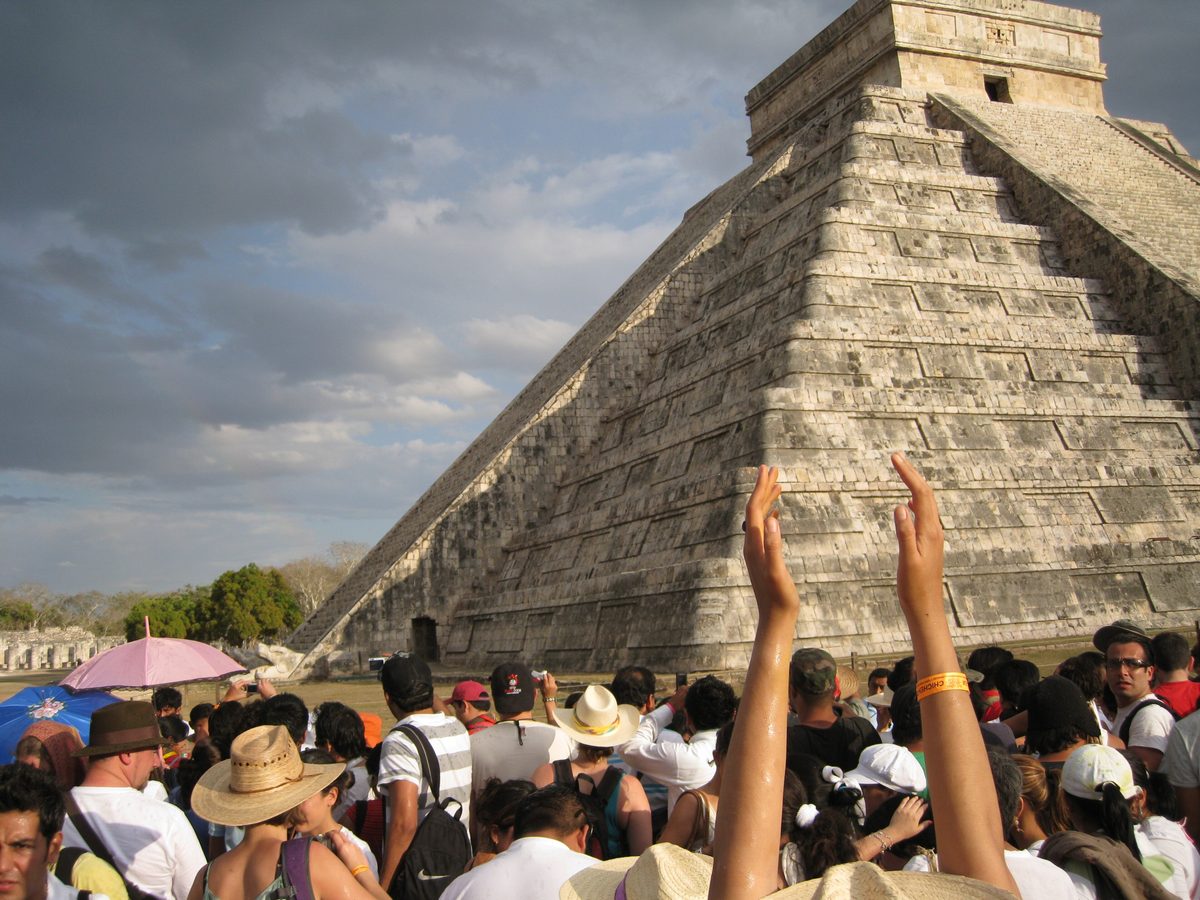
Crowds watch the serpent of light and shadow form down the staircase of El Castillo at Chichén Itzá on the spring equinox.
Bmamlin · Public domain · Wikimedia Commons
Late afternoon · 4:50 PM local Saturday, March 20, 2027

The serpent of Chichén Itzá

Chichén Itzá, Mexico Exact date

Around the equinoxes, the late-afternoon Sun throws a row of triangles of light down the northern staircase of El Castillo. It looks like a serpent sliding down to the carved snake head at the bottom. Whether the Maya planned it or not, it's spectacular.
Tip The effect builds in the last hours before sunset and shows for a few days either side of the equinox. Expect big crowds on the day itself.

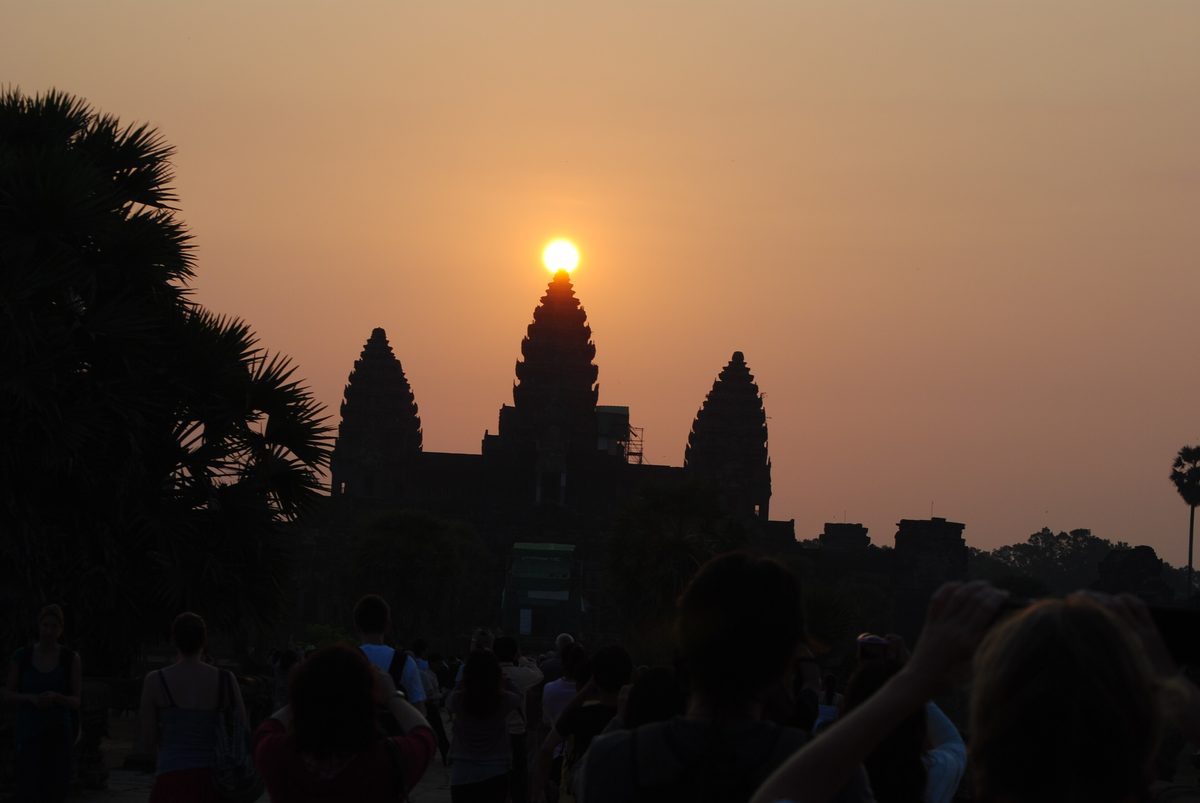
The Sun rises exactly over the central tower of Angkor Wat on the March equinox, watched by a crowd at the western entrance.
សុខគឹមហេង · CC BY-SA 3.0 · Wikimedia Commons
Sunrise · 6:08 AM local Sunday, March 21, 2027

Equinox sunrise over Angkor Wat

Angkor Wat, Cambodia Exact date

At the spring equinox, the Sun rises exactly over the central tower of Angkor Wat when seen from the western entrance. It's the moment the temple's builders aligned it for, and the reflection pools double it.

Tip Get a ticket the day before and be at the causeway by 5 AM for a spot by the north reflection pool.

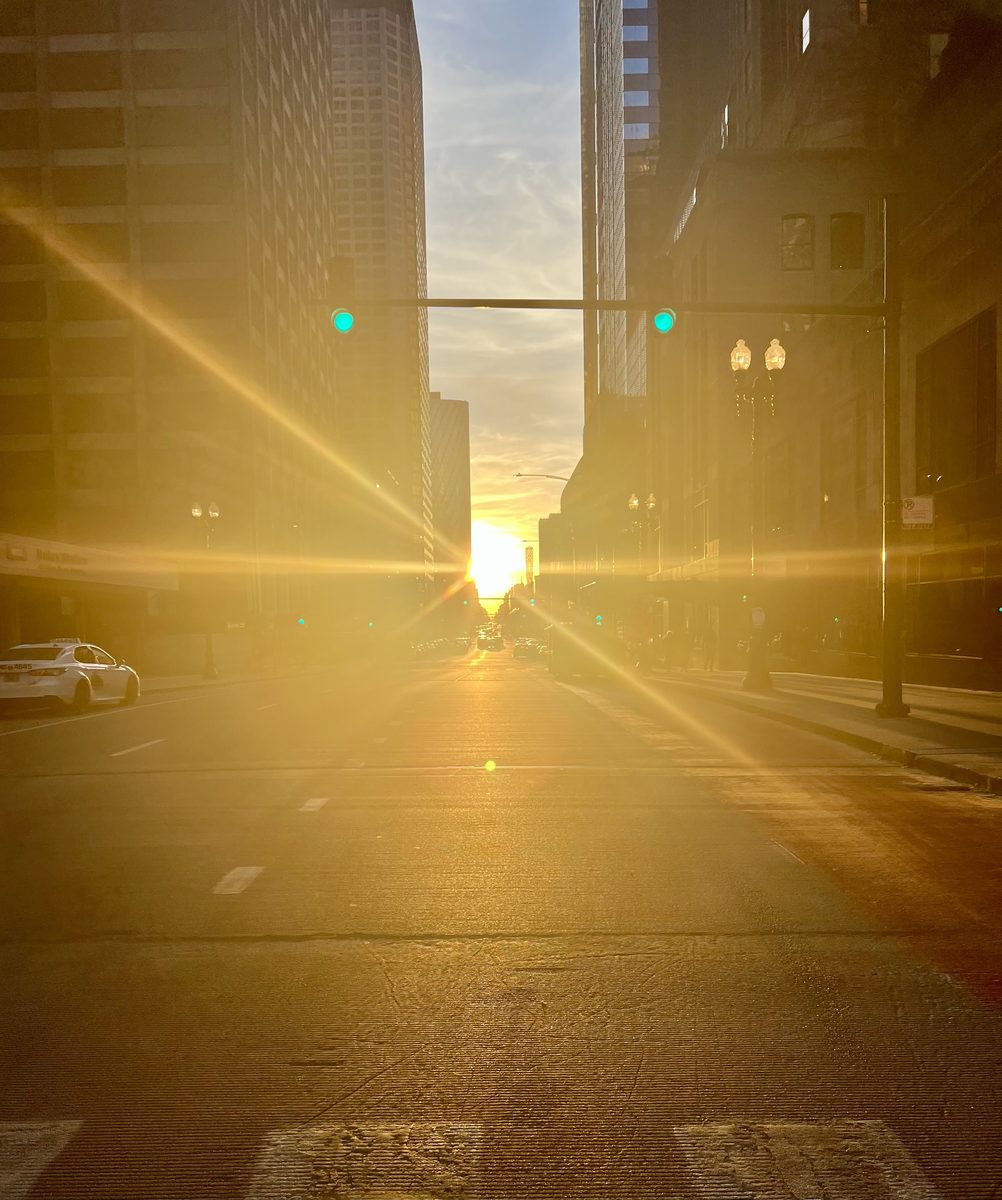
The Sun sets straight down a Chicago Loop street between tall buildings, flooding the road with golden light.
John Dillenbeck · CC0 · Wikimedia Commons
Sunset · 7:02 PM local Saturday, March 20, 2027

Chicagohenge

The Loop, Chicago Exact date

Chicago's street grid runs almost exactly east-west, so at the equinoxes the Sun sets straight down the streets of the Loop. It lights the canyons between the skyscrapers and turns the L tracks gold.

Tip Try Adams, Monroe or Madison, or a bridge over the river for a clear horizon.

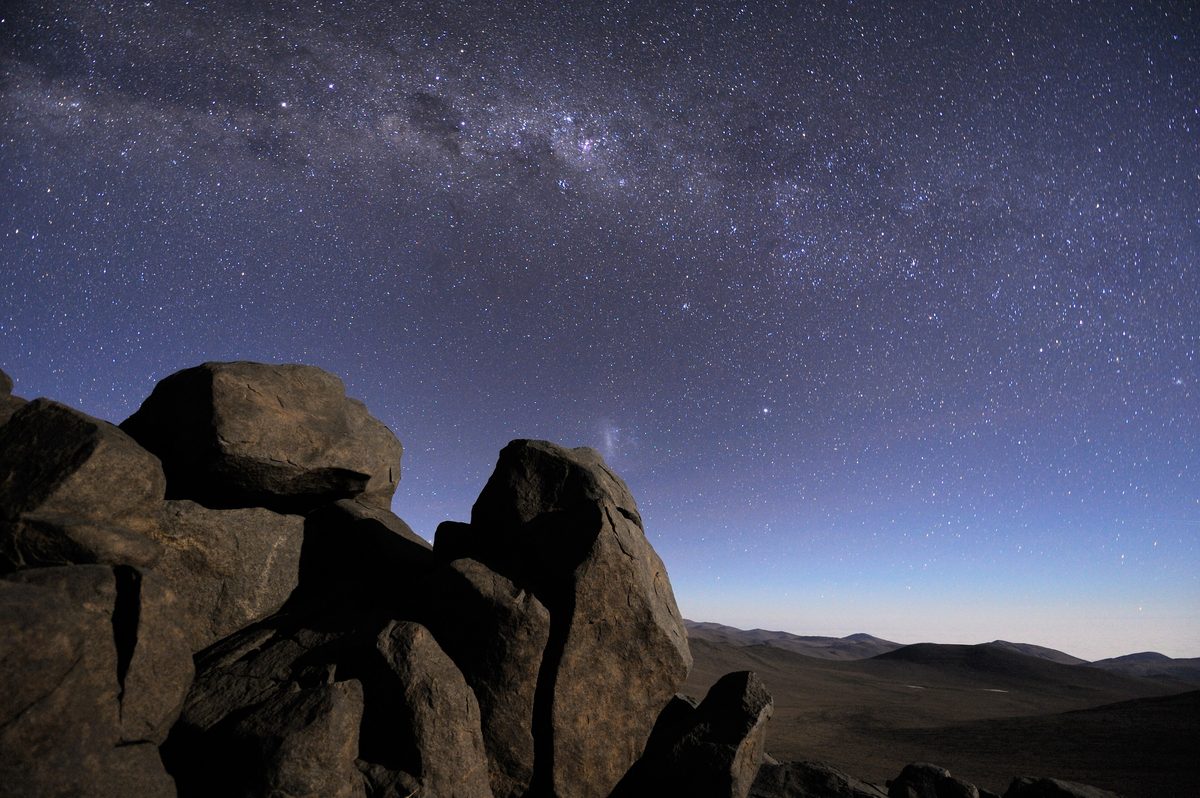
The Milky Way arches over boulders and dark hills in the Atacama Desert at twilight.
Elsewhere in the Atacama Desert. G. Hüdepohl (atacamaphoto.com)/ESO · CC BY 4.0 · Wikimedia Commons
Milky Way core up · 11:02 PM local Tuesday, April 6, 2027

The Milky Way over the Atacama

San Pedro de Atacama, Chile Seasonal opportunity

Highest at 5:12 AM, 84° up in the S · The rest of the Milky Way shows from full dark, earlier

The Atacama is the world's driest nonpolar desert, high, with generally clear skies. That's why the world's biggest telescopes are built here. On a moonless night the Milky Way is bright enough to cast faint shadows, and the Magellanic Clouds hang beside it.

Tip In southern autumn the bright core rises late in the evening and climbs overhead before dawn; by winter it is up at nightfall. Mirador Ckari and the Valle de la Luna close in the early evening, so see the night sky on a licensed star tour from San Pedro; the guides are excellent.

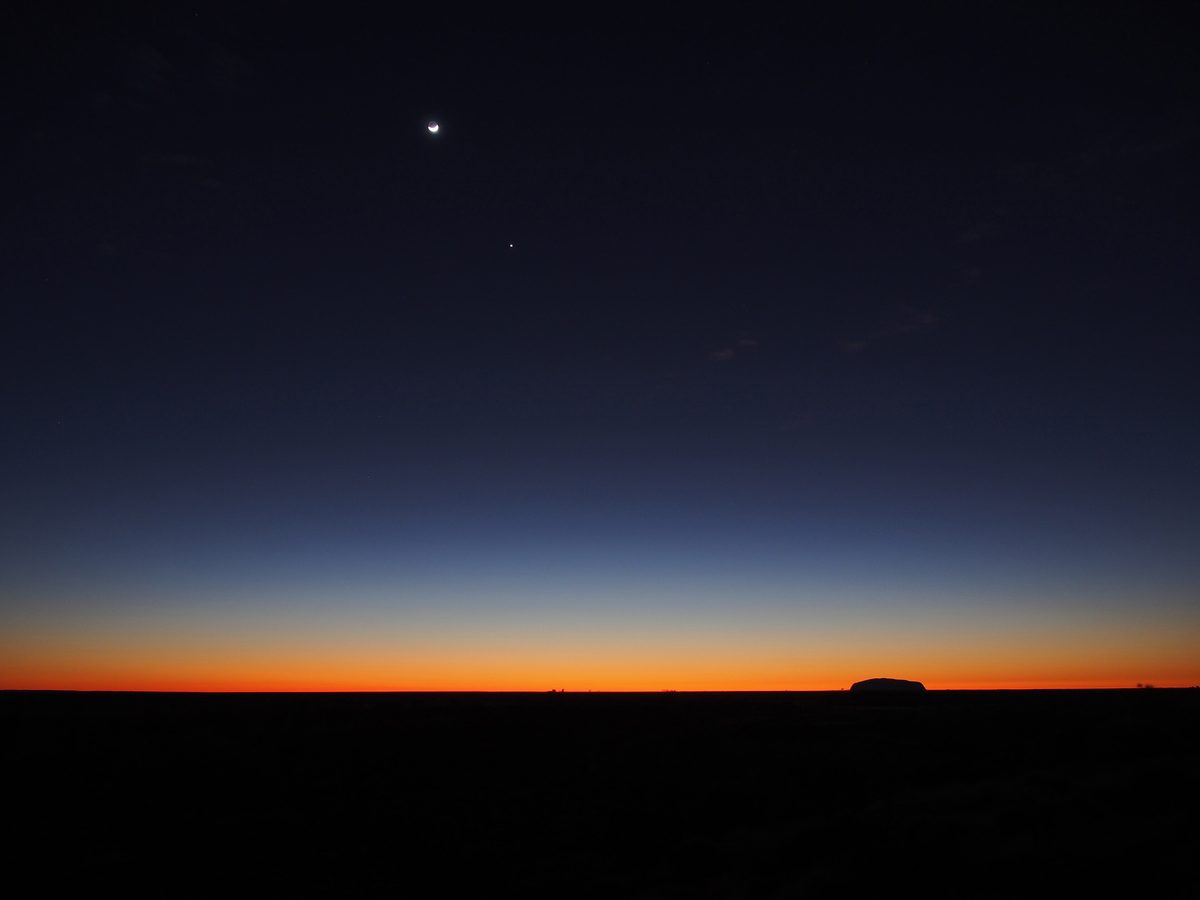
A crescent Moon and a bright planet shine in the deep blue twilight above the dark outline of Uluru on the horizon.
Twilight at Uluru, with the Moon and a planet, not the Milky Way. Grant McIver · CC0 · Wikimedia Commons
Milky Way core up · 11:05 PM local Wednesday, April 7, 2027

Stars over Uluru

Uluru, Australia Seasonal opportunity

Highest at 5:25 AM, 86° up in the S · The rest of the Milky Way shows from full dark, earlier

Deep in Australia's Red Centre, the sky goes from Uluru glowing red at sunset to a Milky Way so bright it seems close enough to touch. The Anangu people see figures in its dark lanes as well as its stars.

Tip The national park closes in the evening (8 PM in April) and everyone must be out by then, so stargaze from Yulara, outside the park, or on an authorized evening tour. In April the core rises late in the evening; by winter it is up at nightfall.
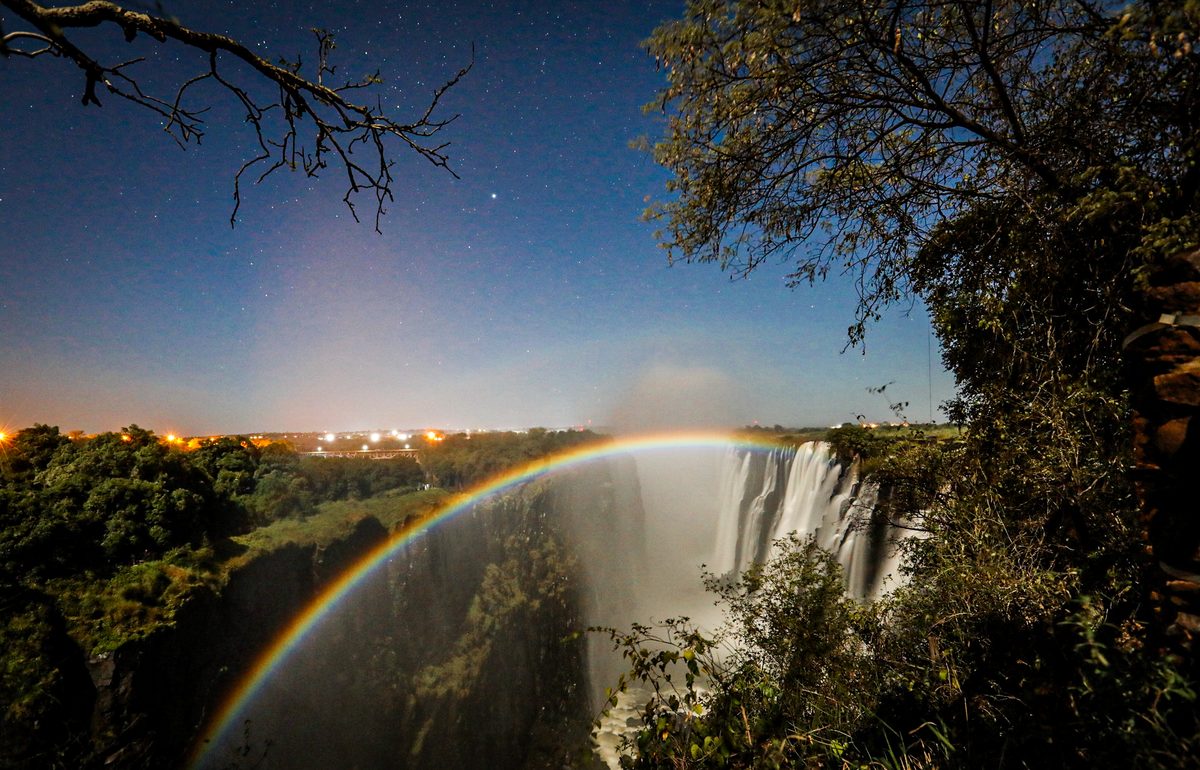
A lunar rainbow arches across the moonlit gorge of Victoria Falls under a starry sky.
Staff Sgt. Luke Wilson, U.S. Army · Public domain · Wikimedia Commons
Moonrise · 5:36 PM local Tuesday, April 20, 2027

A lunar rainbow over Victoria Falls

Victoria Falls, Zimbabwe and Zambia Seasonal opportunity

Full Pink Moon

Around the full Moon, moonlight shining into the spray of the world's largest curtain of falling water makes a pale rainbow arching across the gorge. The local name for the falls, Mosi-oa-Tunya, means the smoke that thunders.

Tip The spray is heaviest in the high-water months, about April to August. Both national parks run lunar-rainbow evenings around the full Moon; bring a rain jacket.

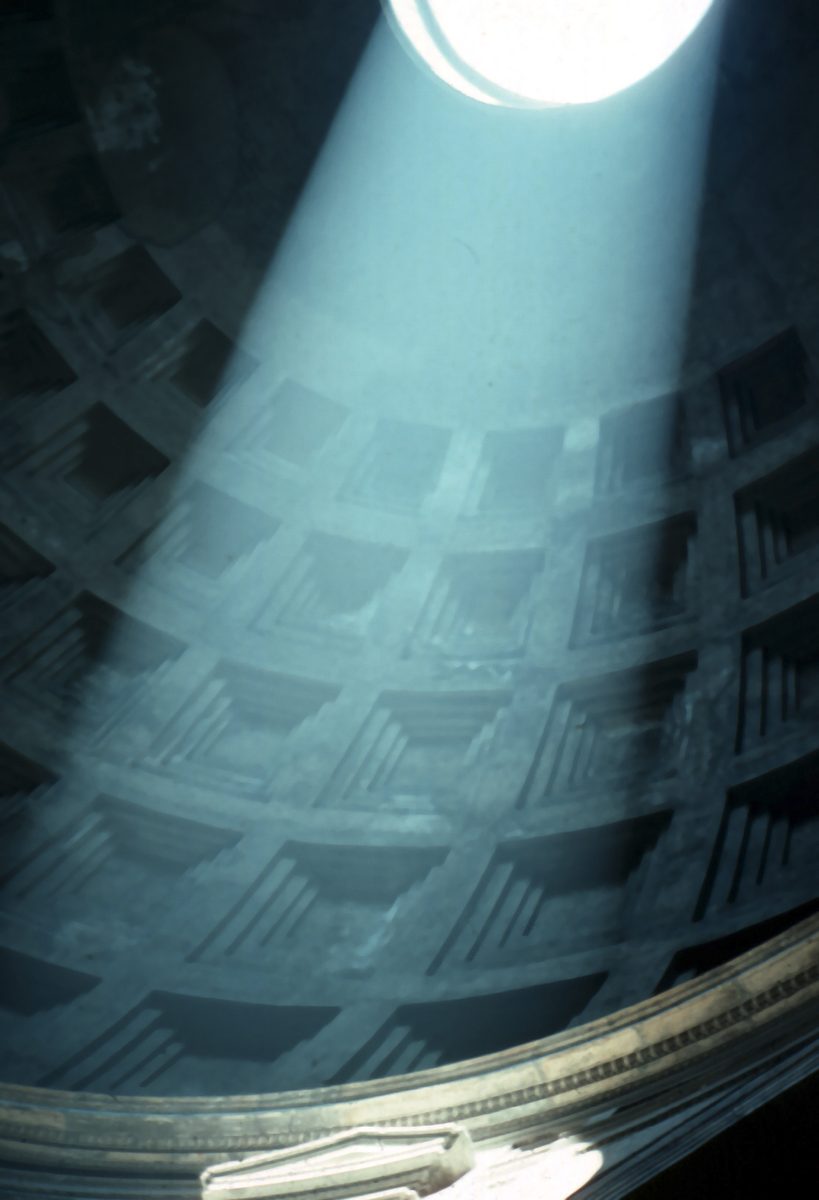
A beam of sunlight from the open oculus slants across the coffered dome inside the Pantheon in Rome.
The oculus beam on an ordinary day, not the April 21 alignment. George W. Houston / Institute for the Study of the Ancient World · CC BY 2.0 · Wikimedia Commons
Solar noon · 1:08 PM local Wednesday, April 21, 2027

Rome's birthday in a beam of sunlight

The Pantheon, Rome Exact date

On April 21, the day Rome traditionally celebrates its founding, the disc of sunlight from the Pantheon's open oculus falls at midday on the entrance doorway, lighting whoever stands in it. Some historians think the emperor was meant to be the one standing there.

Tip The time here is solar noon, around 1:10 PM on Rome's summer clock, not 12:00. The Pantheon has a ticketed entry now; get there early.

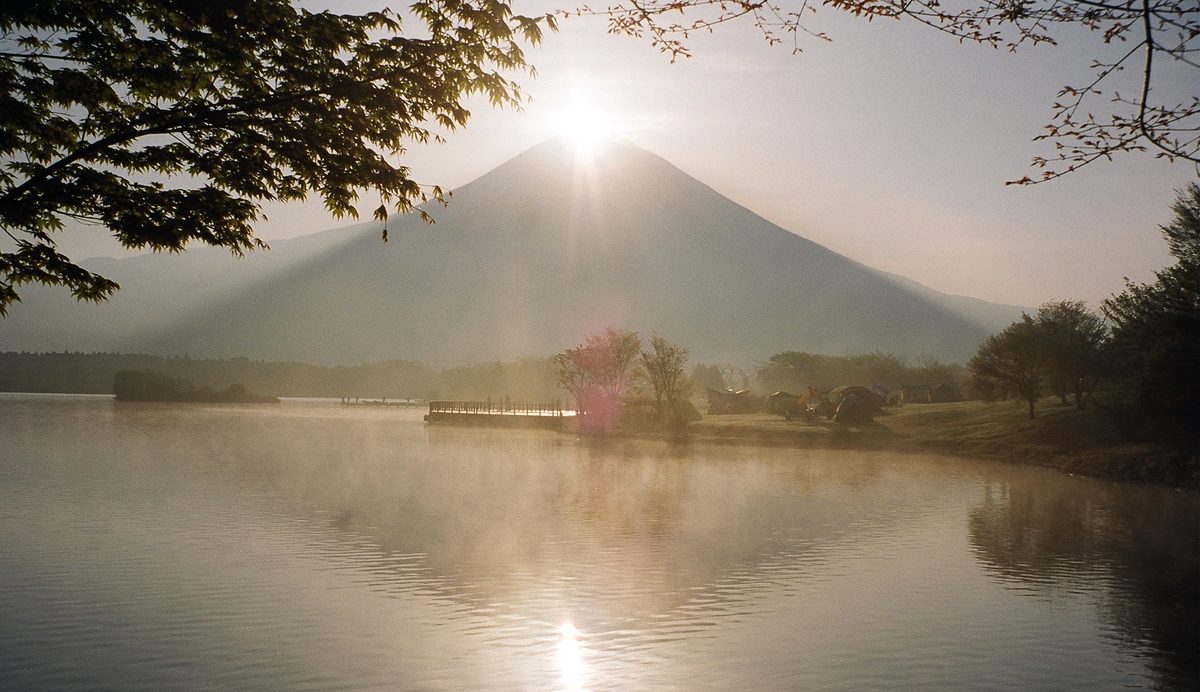
The rising Sun sits exactly on the summit of Mount Fuji above misty Lake Tanuki, its light reflected in the still water.
surimu (cropped) · CC BY 3.0 · Wikimedia Commons
Diamond Fuji · 6:07 AM local Thursday, April 22, 2027

Diamond Fuji over Lake Tanuki

Lake Tanuki, Fujinomiya, Japan Alignment window

The Sun stands on it at 11.4° up, bearing 83°; the day before and after come close · Again Sunday, August 22, 2027 at 6:11 AM

Twice a year, the Sun rises exactly on the summit of Mount Fuji as seen from Lake Tanuki, and for a moment the peak wears it like a diamond. On a still morning the lake doubles it: a second diamond Fuji upside down in the water.

Tip Photographers line the shore before dawn. Calm air makes the reflection; a day either side still puts the Sun close to the summit. Where you stand on the shore moves the exact moment by a minute or two.

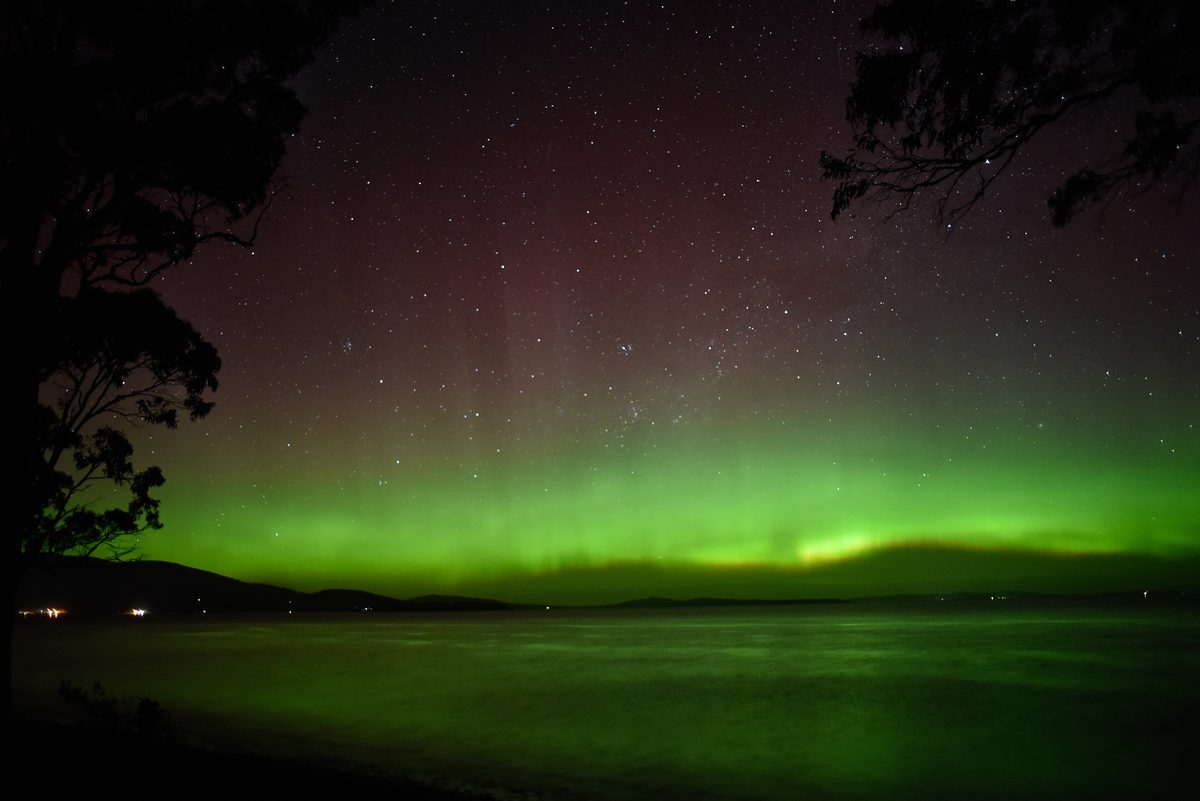
A green and red aurora australis glows low over the water on a starry night in southern Tasmania.
will standring from Hobart, Australia · CC BY 2.0 · Wikimedia Commons
Fully dark · 6:45 PM local Thursday, May 6, 2027

Southern lights over Tasmania

South Arm Peninsula, Tasmania Seasonal opportunity

The darkest nights, around the new Moon · A dark-sky window, not an aurora forecast: check the aurora and cloud forecasts on the day

Tasmania is Australia's best place for the aurora australis, the southern lights. On a strong night the sky over the Southern Ocean glows green and pink, often stronger to a camera than to the eye.

Tip Watch the aurora forecast (a Kp of 5 or more helps at this latitude) and pick somewhere with a clear southern horizon away from Hobart's lights. Bruny Island works too.

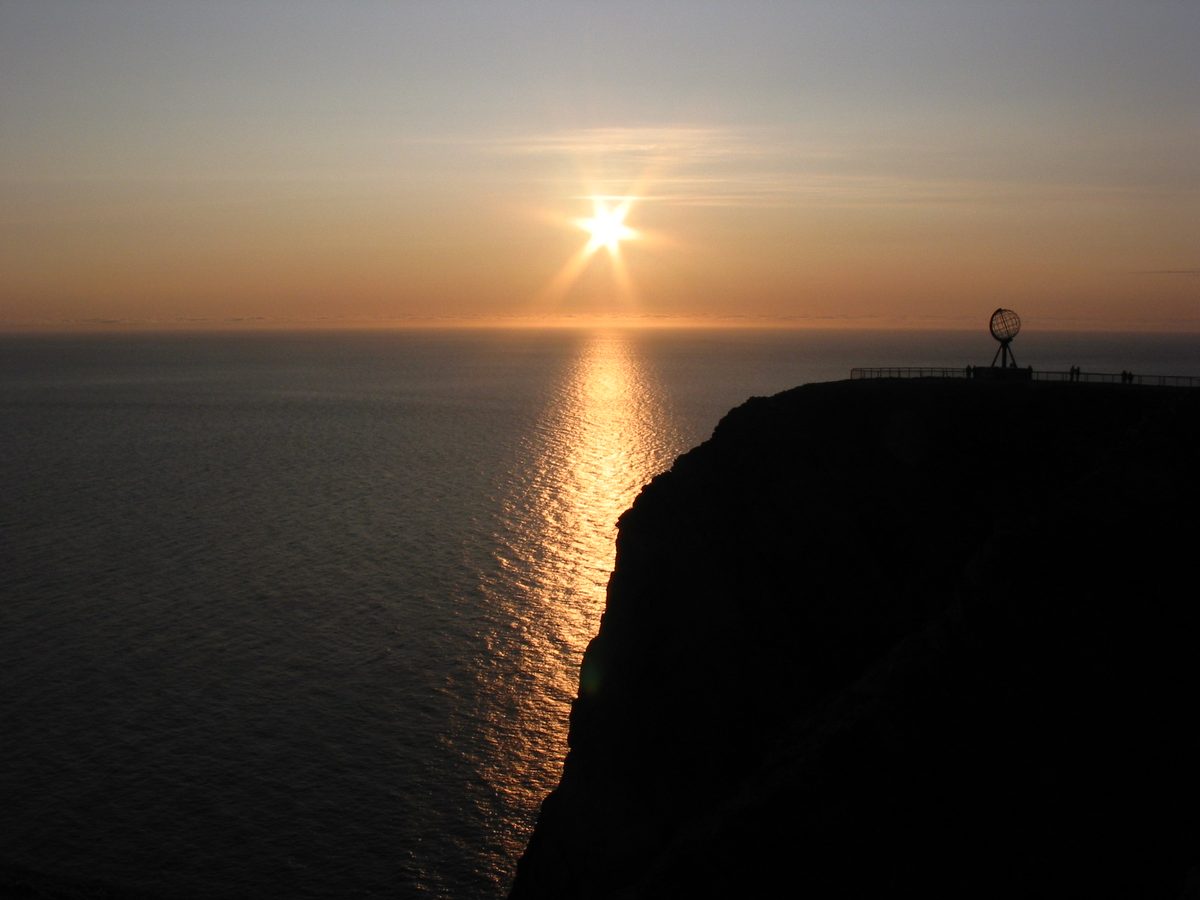
The midnight Sun hangs above the Arctic Ocean beside the dark cliff of North Cape and its globe monument.
Yan Zhang · CC BY-SA 3.0 · Wikimedia Commons
The Sun at midnight · 11:59 PM local Friday, May 14, 2027

The midnight Sun at North Cape

North Cape, Norway Seasonal opportunity

Every night until July 29

From mid-May to late July, the Sun never sets at Europe's northern edge. At midnight it skims along the northern horizon above the Arctic Ocean, seen from a cliff 300 meters high, before climbing again.

Tip Arrive by 11 PM. The globe monument faces due north and the Sun is lowest right around midnight.

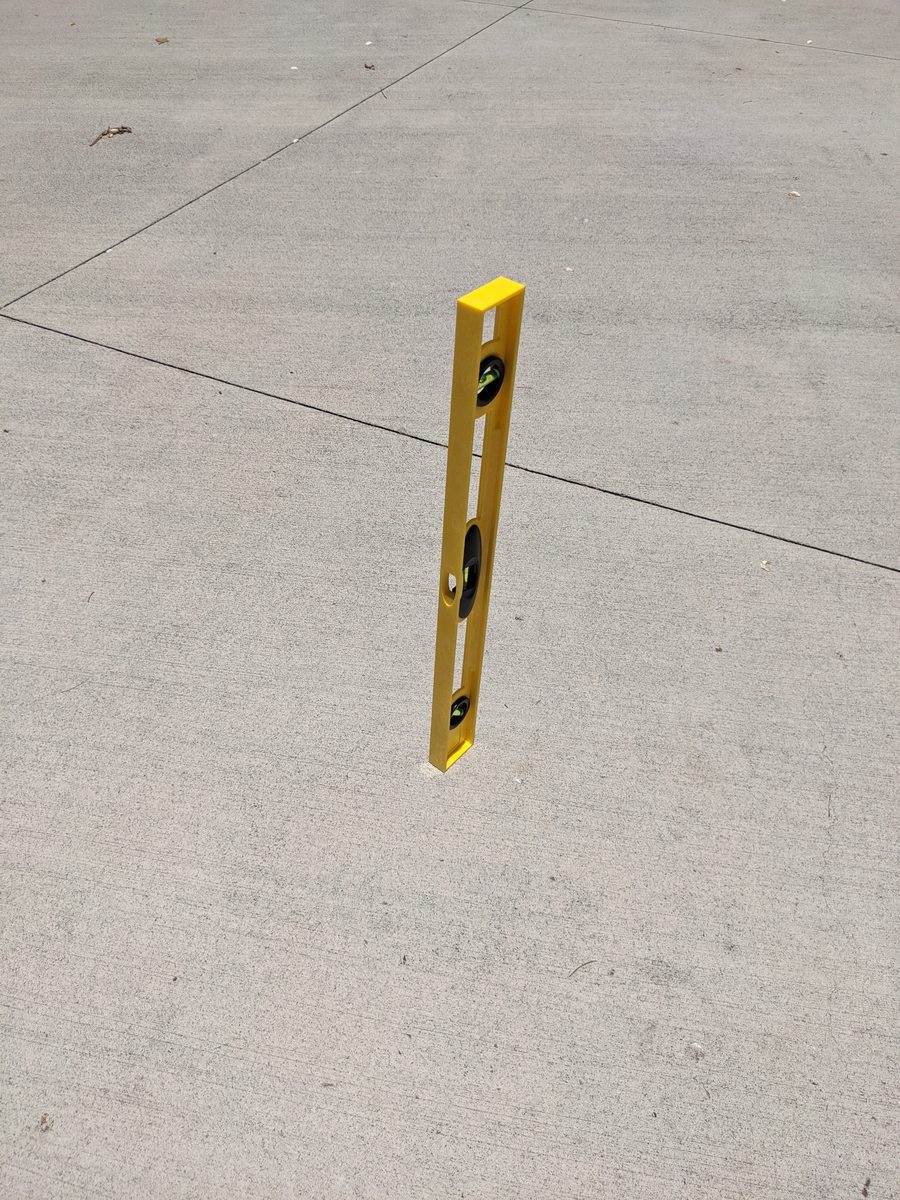
A builder's level stands upright on a Honolulu sidewalk at Lāhainā Noon and casts almost no shadow.
eli fessler · CC BY-SA 4.0 · Wikimedia Commons
The Sun overhead · 12:29 PM local Thursday, May 27, 2027

The day shadows disappear in Hawaiʻi

Honolulu, Hawaiʻi Exact date

Upright things lose their shadows at solar noon · Again Friday, July 16, 2027 at 12:38 PM

Twice a year the noon Sun stands straight overhead in Hawaiʻi, and upright things lose their shadows: a flagpole, a person, a can of soda. It's called Lāhainā Noon. No other U.S. state sees it, because the rest lie too far north of the tropics.

Tip The dates move across the islands, earliest on Hawaiʻi Island in May. Bishop Museum publishes each town's dates and times. Stand something upright on flat ground at solar noon and watch.

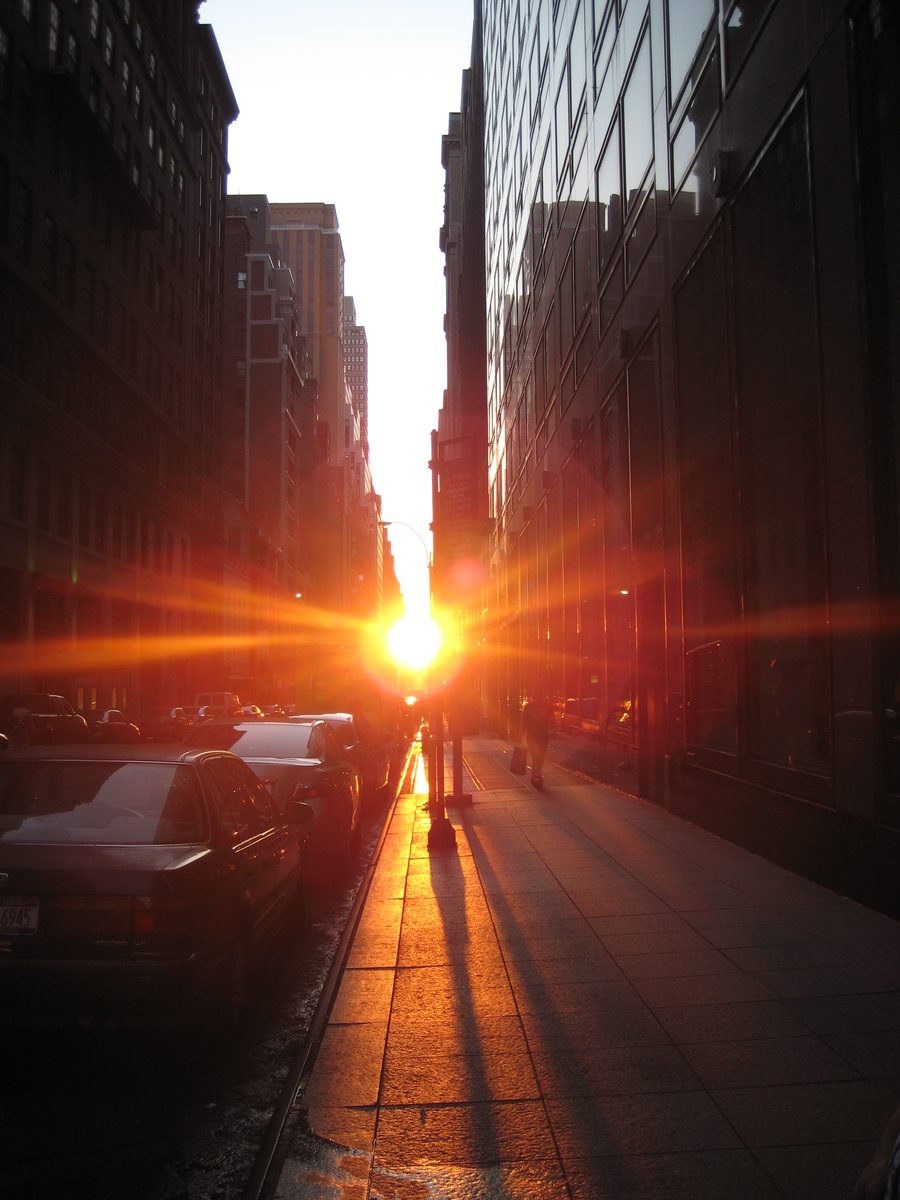
The setting Sun blazes at the end of a Manhattan cross street, lighting the sidewalk between tall buildings.
Sevtibidou · CC BY-SA 3.0 · Wikimedia Commons
Sunset · 8:18 PM local Saturday, May 29, 2027

Manhattanhenge

Manhattan, New York Alignment window

Again Tuesday, July 13, 2027

Twice a year, the setting Sun lines up exactly with Manhattan's street grid and pours down the cross streets, lighting both sides of the canyon gold. Neil deGrasse Tyson gave it the name. Crowds stop traffic on 42nd Street to photograph it.

Tip Get there half an hour early. 14th, 23rd, 34th and 57th Streets line up too. The dates here are our predictions from the grid's bearing; the American Museum of Natural History publishes the official full-Sun and half-Sun dates and times each spring.

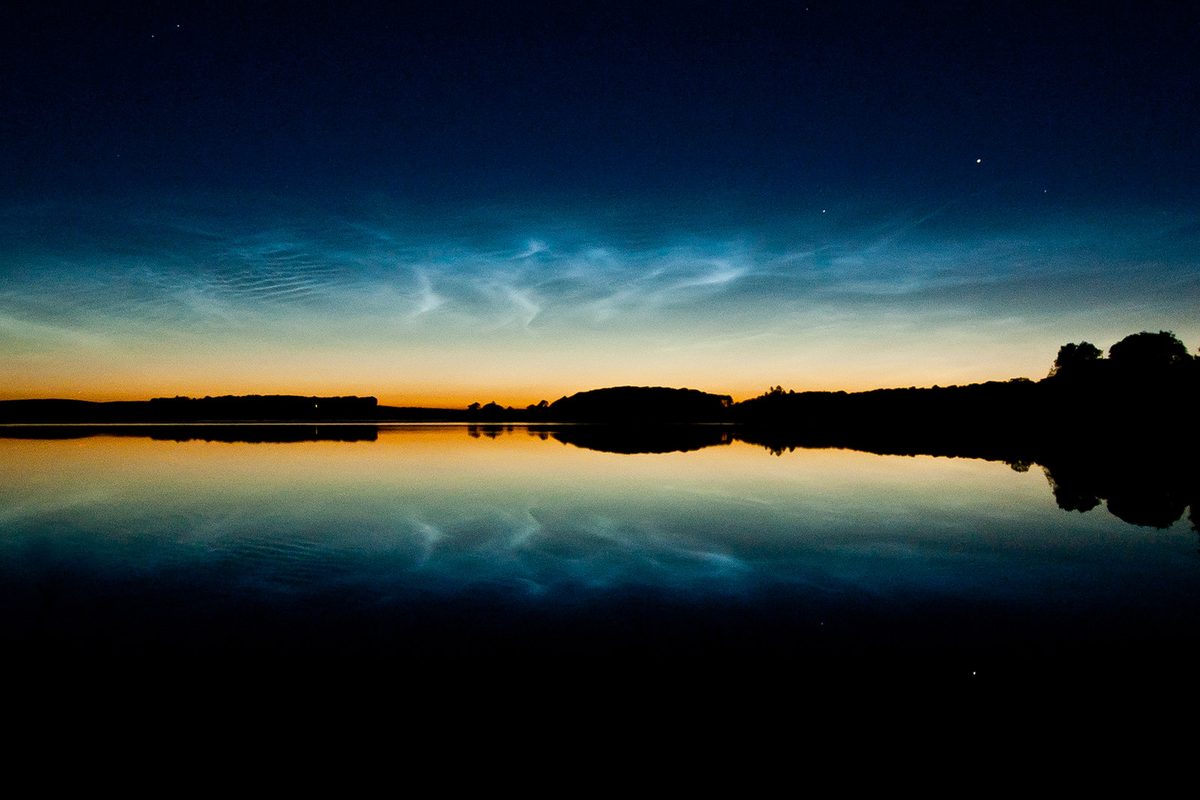
Electric blue rippling noctilucent clouds glow above the twilight horizon, mirrored in the still water of a Scottish loch.
Over Mochrum Loch, in south-west Scotland. David Baird · CC BY-SA 2.0 · Wikimedia Commons
Late twilight, looking north · 11:11 PM local Tuesday, June 1, 2027

Night-shining clouds over Scotland

Tomintoul and Glenlivet, Scotland Seasonal opportunity

From June 1 to July 31

On summer nights, clouds of ice crystals 80 km up, far above the weather, stay lit by the Sun long after it has set, and glow electric blue-white in rippling bands low in the north. They are called noctilucent clouds, night-shining.

Tip They come and go: a chance on clear nights rather than a forecast. Look low in the north between about an hour and two hours after sunset, or the same before sunrise.

The Sun rises behind the Heel Stone at Stonehenge as a crowd watches on the summer solstice.
Andrew Dunn · CC BY-SA 2.0 · Wikimedia Commons
Sunrise · 4:51 AM local Monday, June 21, 2027

Midsummer sunrise at Stonehenge

Stonehenge, England Exact date

On the longest day, the Sun rises just beside the Heel Stone along the monument's great axis, as it has for 4,500 years. Thousands stay up all night on the plain to see it.

Tip The solstice sunrise is the busiest night of the year here. Check English Heritage's announced managed-access dates and times, and expect drums.

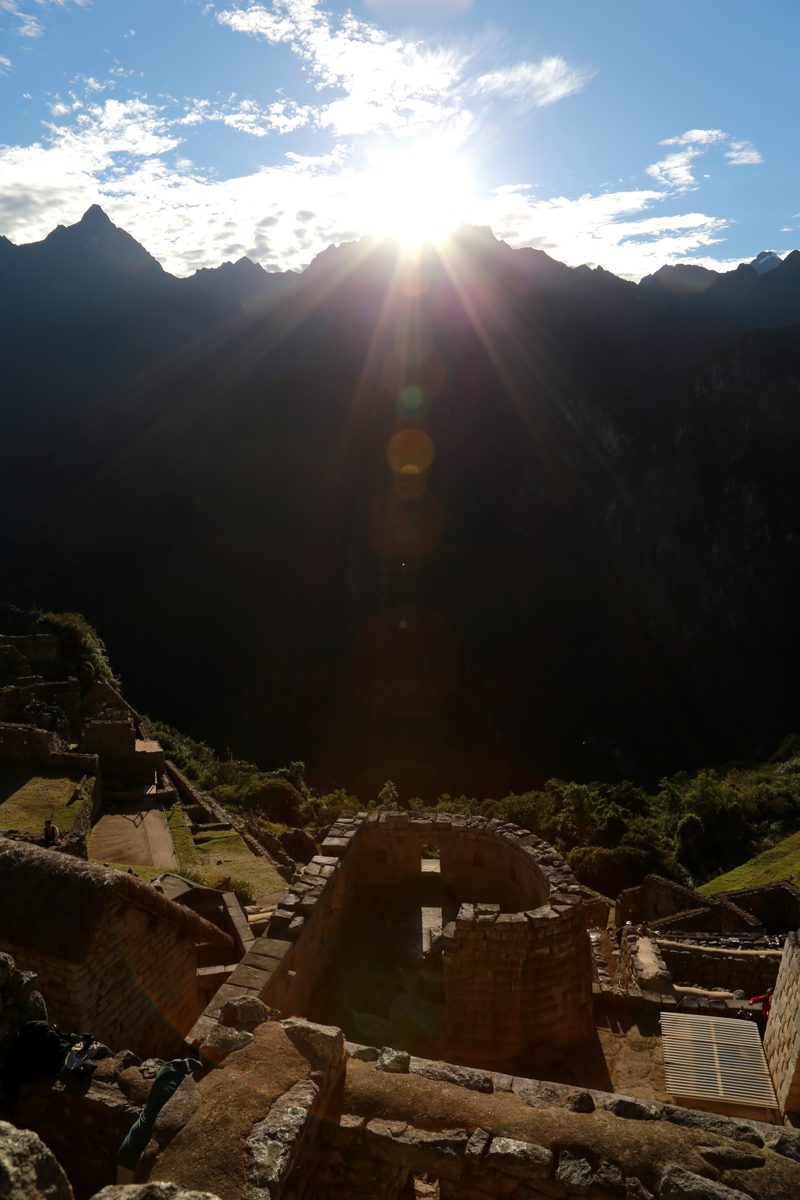
The solstice Sun rises over the Andes above the curved stone Temple of the Sun at Machu Picchu.
François Bianco · CC BY-SA 2.0 · Wikimedia Commons
Sunrise · 6:11 AM local Monday, June 21, 2027

June solstice at Machu Picchu

Machu Picchu, Peru Exact date

At the June solstice, winter in the Andes, the first sunlight falls through a window of the Temple of the Sun onto the carved rock inside. Days later, Cusco celebrates Inti Raymi, the Inca festival of the Sun.

Tip Entry is by timed ticket on a set circuit, and not every circuit passes the Temple of the Sun, which is seen from outside. Check which circuit and hour you need before booking, and take an early bus from Aguas Calientes. Inti Raymi in Cusco is on June 24.

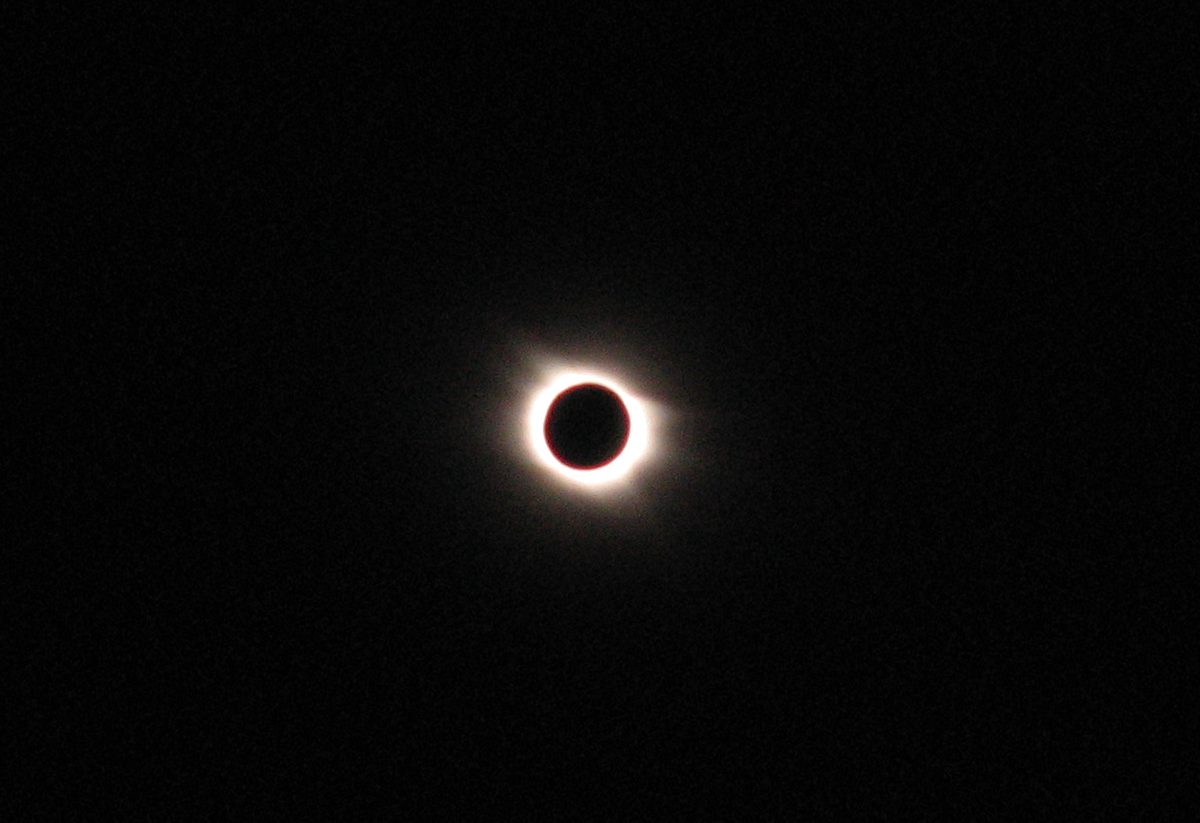
The Sun in total eclipse, a black disc ringed by the white corona, seen from Egypt in 2006.
The total eclipse of 29 March 2006, seen from Sallum, Egypt. Lisa4edit · CC0 · Wikimedia Commons
Totality begins · 1:02 PM local Monday, August 2, 2027

The eclipse of the century at Luxor

Luxor, Egypt Exact date

Totality 6 min 22 s · Sun 82° up

On August 2, 2027, the Moon covers the Sun for over six minutes above Luxor: the longest totality on land for the rest of this century. The Sun will be almost straight overhead in a desert sky that is nearly always clear in August. Think temples, pharaohs, and daytime stars.

Tip Book early: Luxor will be full. Bring eclipse glasses for the partial phases, take them off only for totality, and drink plenty of water.

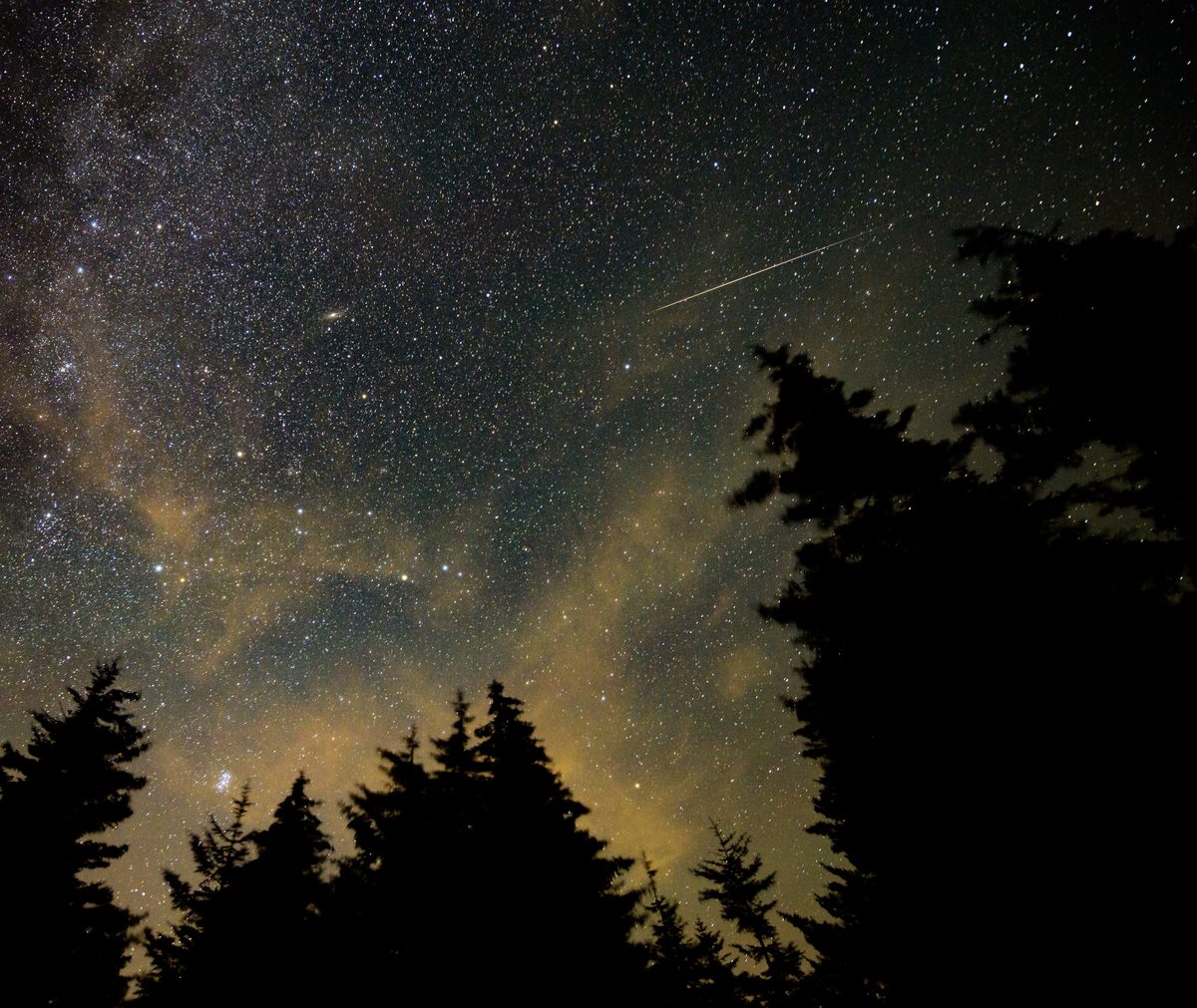
A bright Perseid meteor streaks across a starry sky above dark evergreen trees.
A Perseid over Spruce Knob, West Virginia, in 2021. NASA/Bill Ingalls · Public domain · Wikimedia Commons
Peak night · 11:30 PM local Thursday, August 12, 2027

The Perseids at Cherry Springs

Cherry Springs State Park, Pennsylvania Exact date

Up to about 100 an hour under a perfect sky · Moon 85% lit, setting at 2:30 AM: best after that

Cherry Springs has some of the darkest skies on the US East Coast, and in August the Perseids put on the summer's best meteor shower. Warm nights, a field full of people on blankets, and a meteor every minute or so.

Tip The best rates come after midnight, once the shower's radiant has climbed. Anyone can use the Night Sky Public Viewing Area; the Overnight Astronomy Observation Field needs registration, a permit and a fee. No white lights.

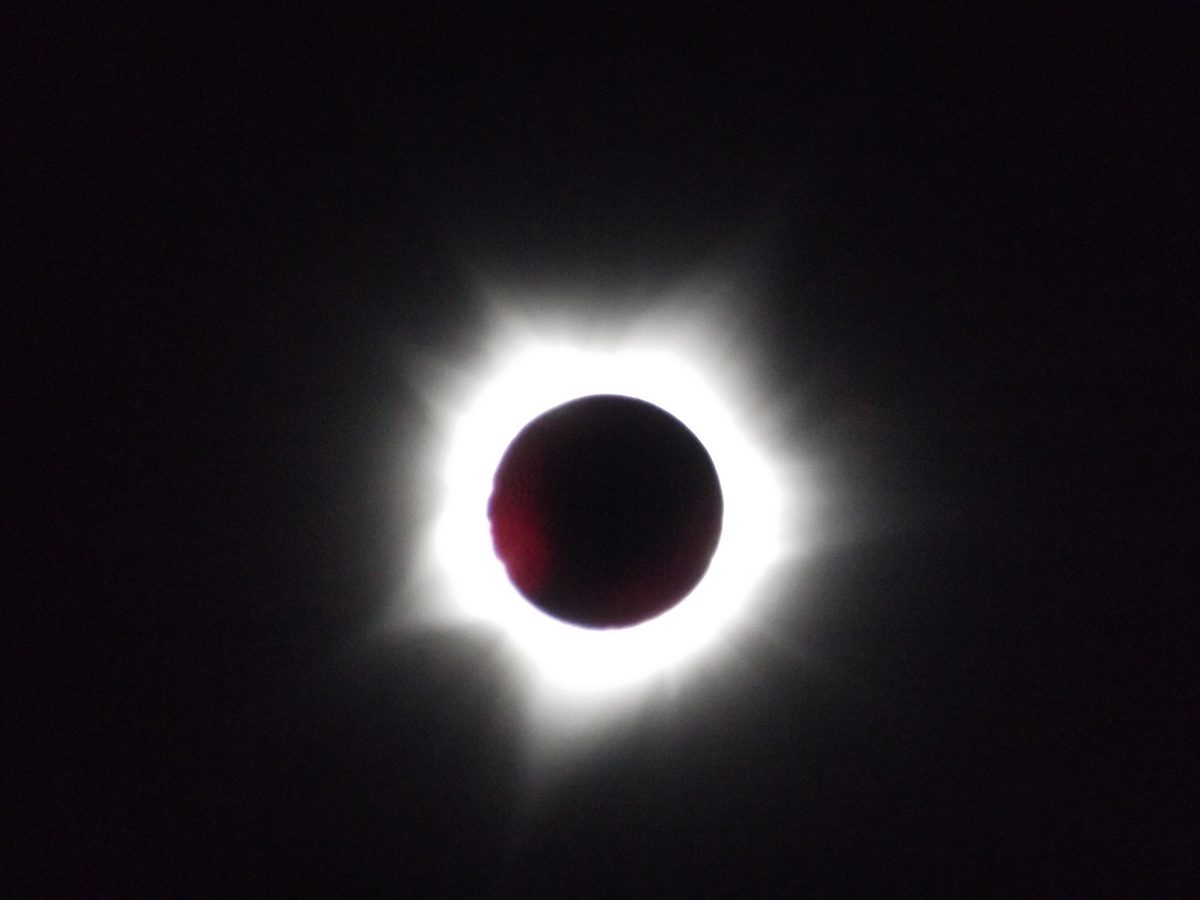
The Sun in total eclipse, a dark Moon edged with red prominences inside a bright white corona.
The total eclipse of 20 April 2023, seen from Exmouth, Western Australia. Dougie3000 · CC BY-SA 4.0 · Wikimedia Commons
Totality begins · 2:00 PM local Saturday, July 22, 2028

Total eclipse over Sydney

Sydney, Australia Exact date

Totality 3 min 41 s · Sun 29° up · Published figures run from about 3 min 41 s to 3 min 48 s, by source and exact spot

In July 2028 the Moon's shadow crosses Australia and goes right over Sydney Harbour, the city's first total eclipse since 1857. Picture totality above the Opera House and the Harbour Bridge in the middle of the day.

Tip Totality comes just after 2 PM, with the Sun in the north-west: pick a harbourside spot with a clear view that way. It's winter there, so check the afternoon cloud forecast and be ready to move. Wear eclipse glasses for the partial phases and take them off only during totality.

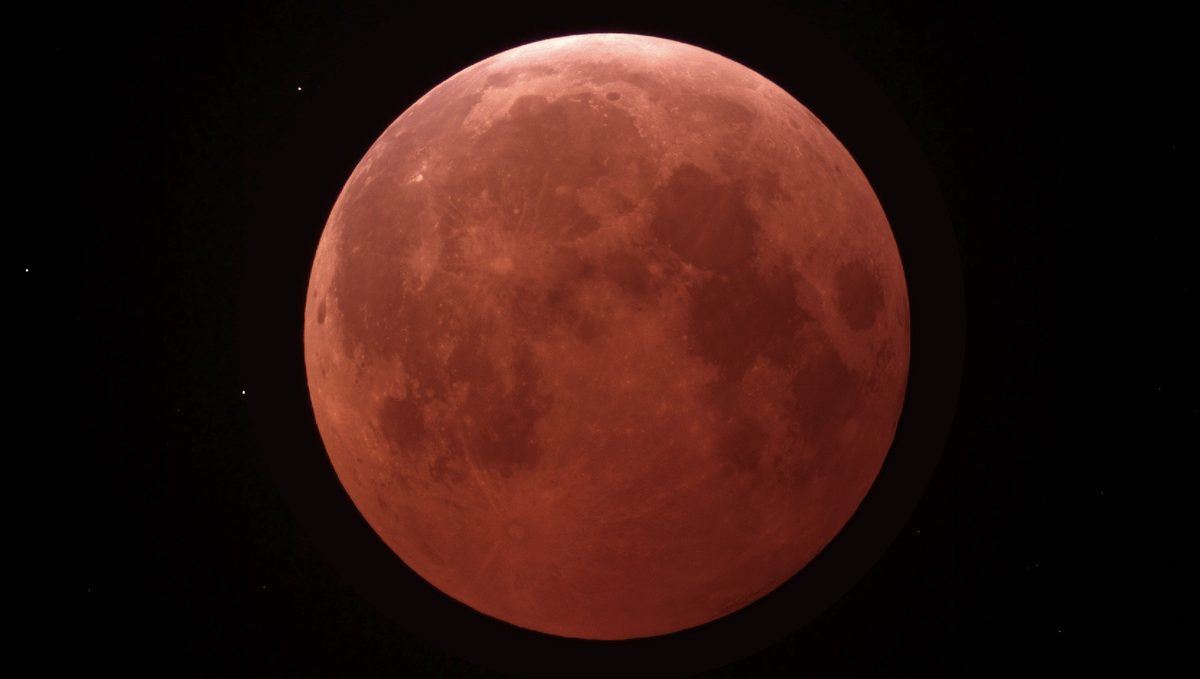
The Moon glows deep copper red in Earth's shadow during a total lunar eclipse.
A total lunar eclipse in 2025, not over Rapa Nui. Brucewaters · CC BY-SA 4.0 · Wikimedia Commons
Deepest red · 9:22 PM local Monday, June 25, 2029

A blood Moon over the moai

Rapa Nui (Easter Island) Exact date

On June 25-26, 2029, the Moon spends over an hour and a half in Earth's shadow, one of the longest total lunar eclipses of the century. On one of the most remote islands on Earth, it hangs high and red over the moai of Ahu Tahai, right at the edge of town.

Tip No glasses needed for a lunar eclipse. The Moon turns deepest red in the middle of totality.

Weather data by Open-Meteo.com and MET Norway (CC BY 4.0), from models by NOAA, ECMWF, DWD, Météo-France, KNMI, DMI, JMA and the Australian Bureau of Meteorology; past temperatures contain modified Copernicus Climate Change Service information. Maps © OpenFreeMap, OpenMapTiles and OpenStreetMap contributors (ODbL). Places from GeoNames (CC BY 4.0). Space weather from NOAA SWPC; observed cloud contains modified NOAA GOES data and modified EUMETSAT Meteosat data (CC BY 4.0); radar contains modified NOAA MRMS and EUMETNET OPERA (CC BY 4.0) data; storms from NOAA NHC and JTWC; orbits from CelesTrak, launches from The Space Devs, aircraft from adsb.lol (ODbL), ground heights from AWS Terrain Tiles, airport cloud reports from the NOAA Aviation Weather Center, eruptions from the aviation volcanic ash advisories and the USGS volcano observatories, volcano heat from NASA FIRMS, earthquakes from the USGS and eruption records from the Smithsonian Global Volcanism Program, pictures of past and world events from Wikimedia Commons, credited on each, constellation figures from Johannes Hevelius’s Uranographia (1690) and by Johan Meuris for Stellarium (Free Art License), cloud now from NASA GIBS and EUMETSAT, satellite imagery from the USGS and NASA Blue Marble. Full credits and licences.

Forecasts and sky-quality ratings are estimates, not guarantees - check official forecasts and warnings before you travel, and use the site at your own risk. Terms & disclaimer · Privacy · Contact · Cookie choices · Do Not Sell or Share My Personal Information